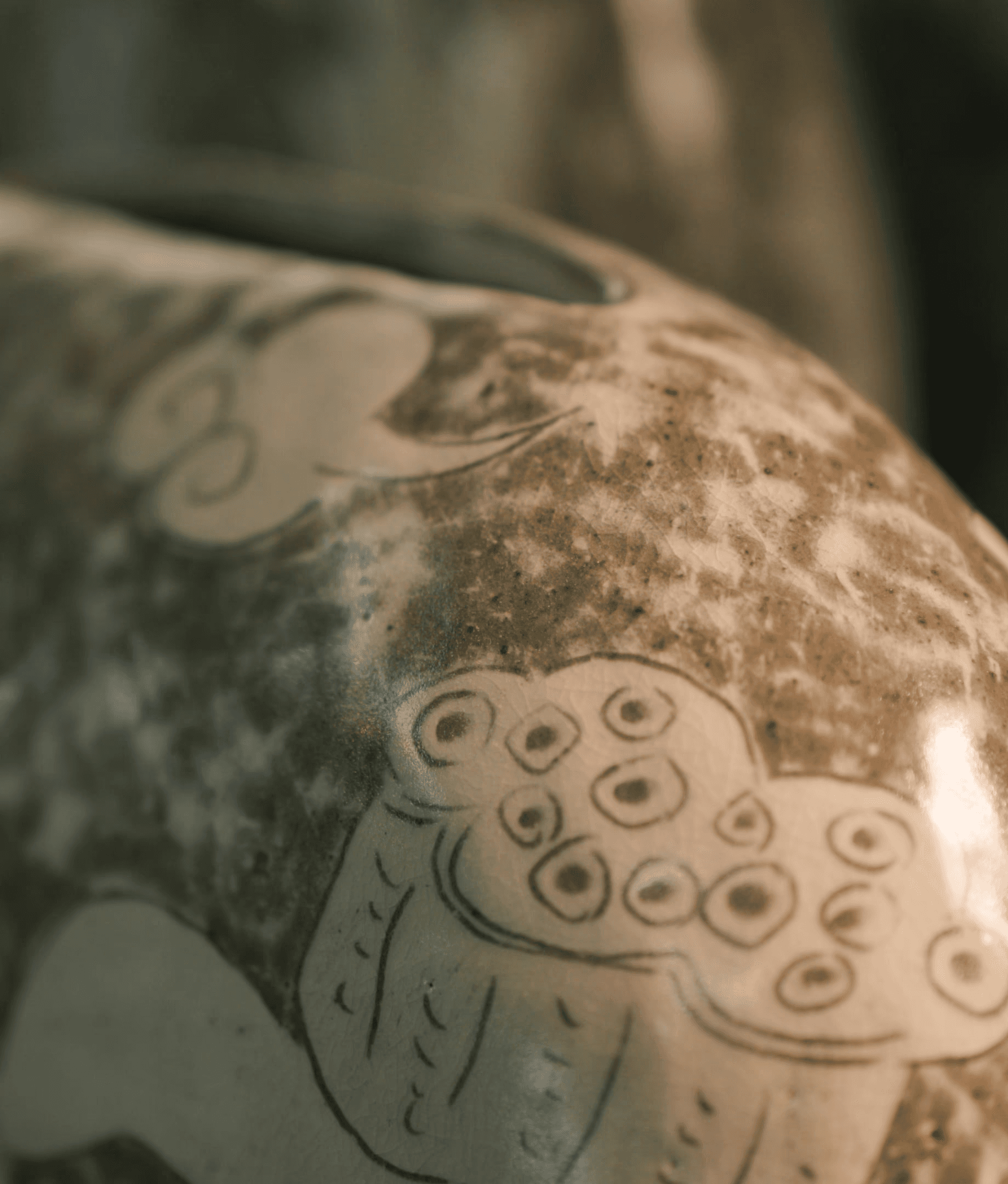
Lacquer is a quiet record of time. The raw sap extracted from the lacquer tree absorbs not only the brush and the artisan’s hand, but also light, air, and the slow accumulation of time itself. When light settles upon wood, it deepens along the grain of years. Lacquer is not a mere material—it is an art of layers built from patience, human touch, and time.
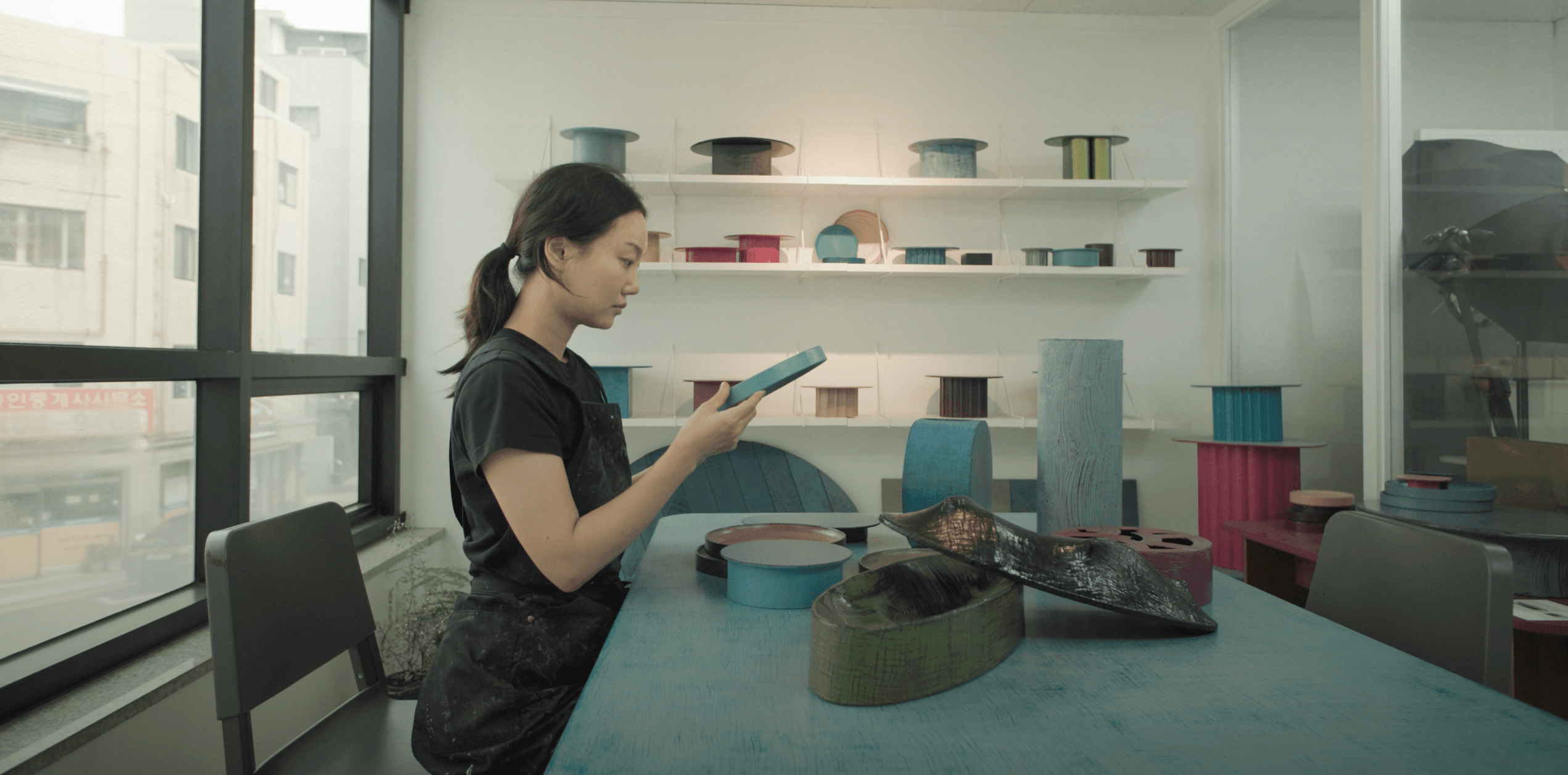
Korean lacquer artist Sojung Pyeon translates this silent process into a language of contemporary sensibility. Her work reveals the material and emotional depth of lacquer, transforming it from a craft into an art form that contains time itself. Each of her objects embodies the tension between tradition and modernity, matter and emotion—painted landscapes of color shaped by the passage of years.
Trained in metalcraft and Oriental painting, Pyeon earned certification as a Cultural Heritage Restoration Technician (漆匠, Chiljang), grounding her work in the discipline of traditional Korean lacquer craft. Her approach extends beyond revival: she overlays traditional technique with modern perception, expanding lacquer’s presence from utilitarian tableware to spatial art objects. What emerges from her hands is not just craft, but a form of living art—objects that hold and reflect time.
The Art of Hands, Material, and Waiting
Lacquerware is an art built upon slowness and care.
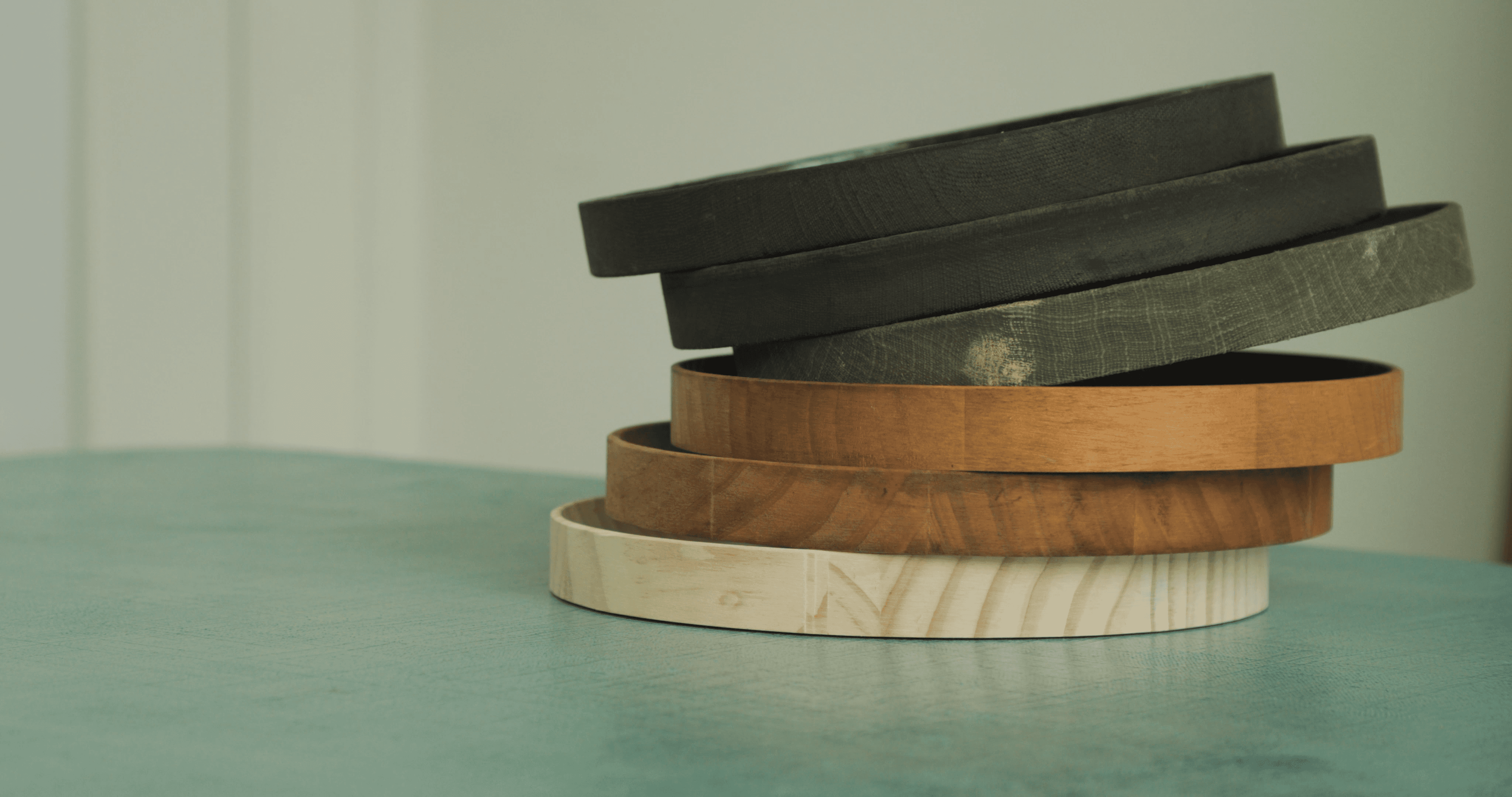
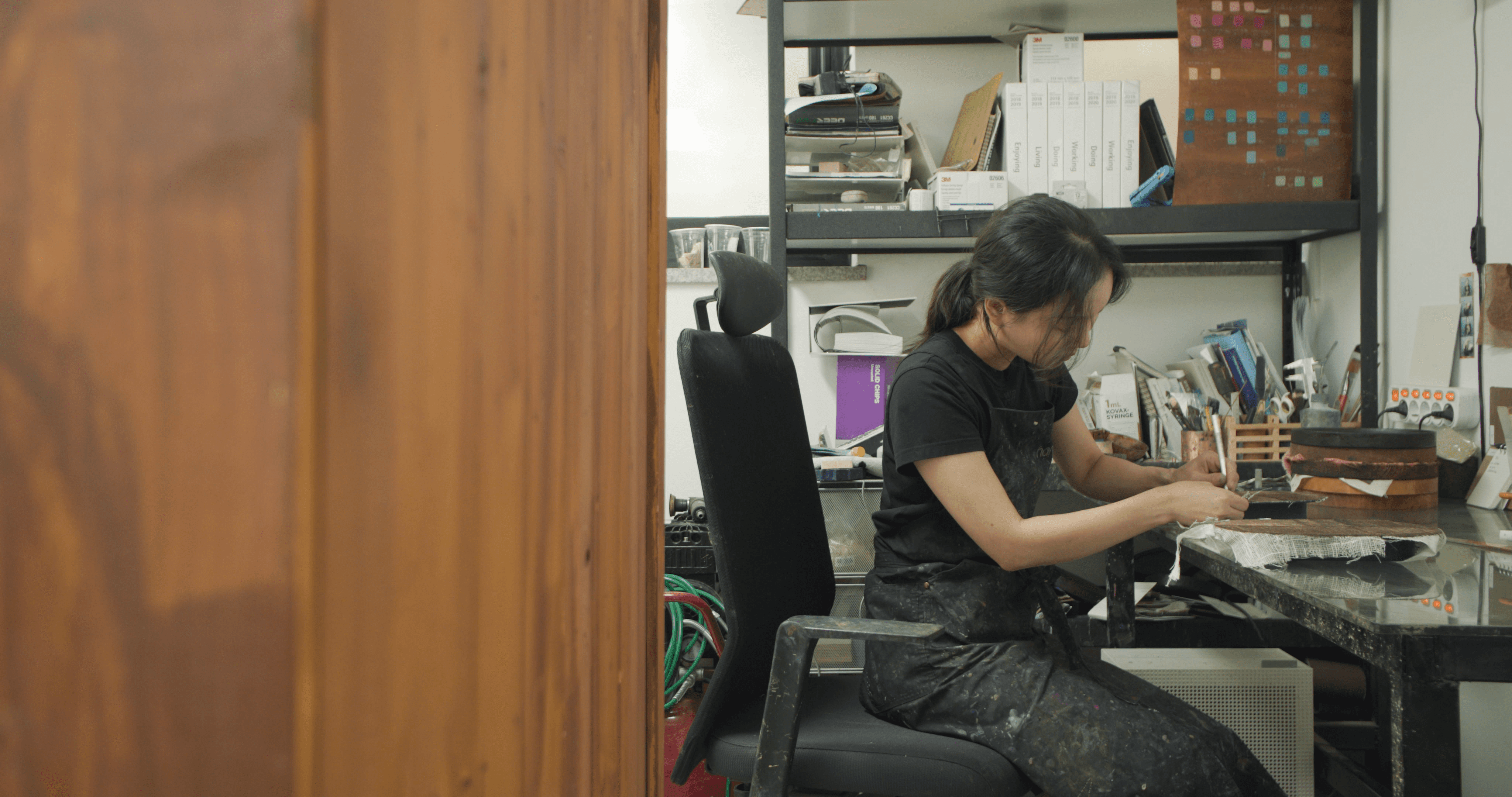
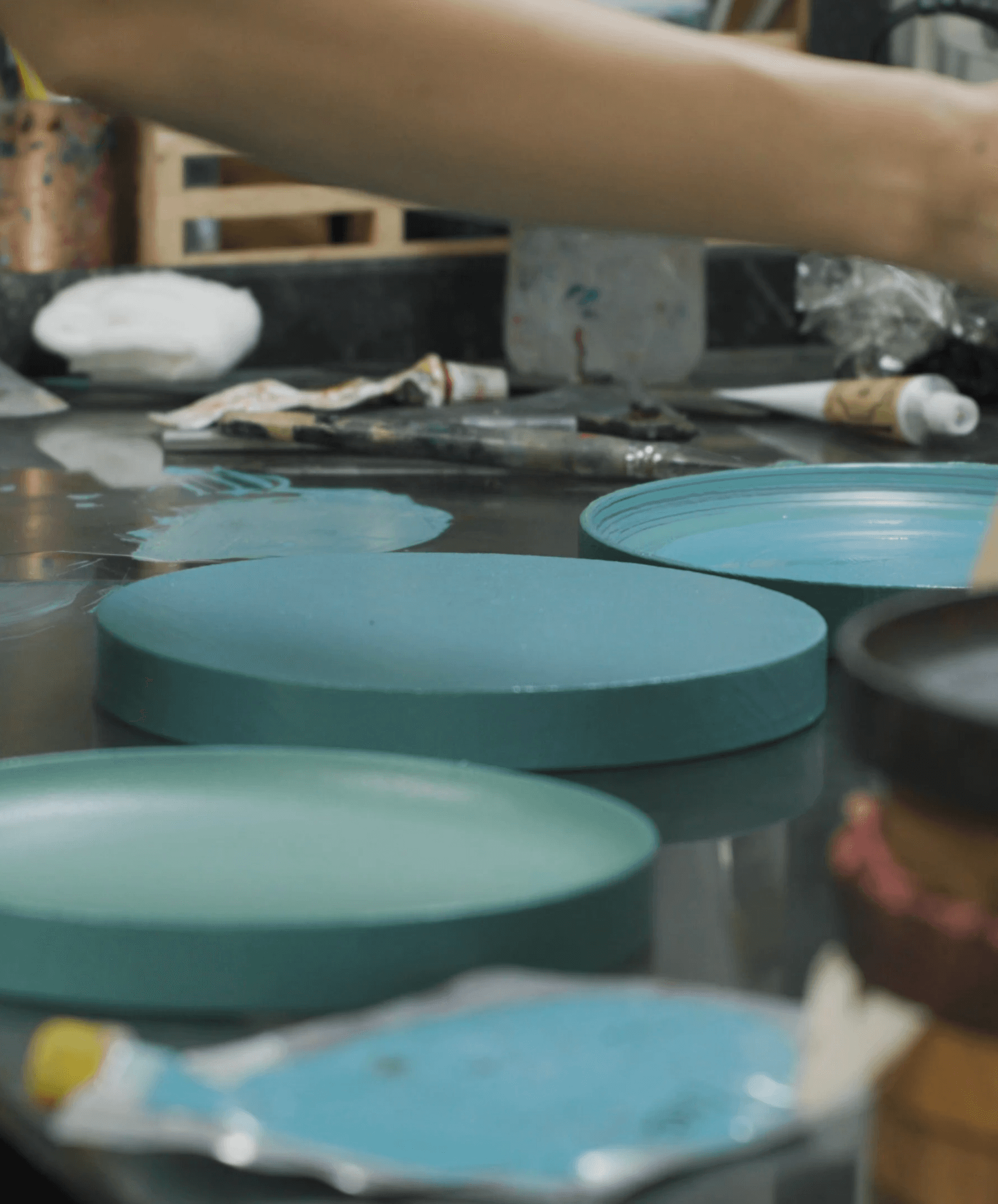
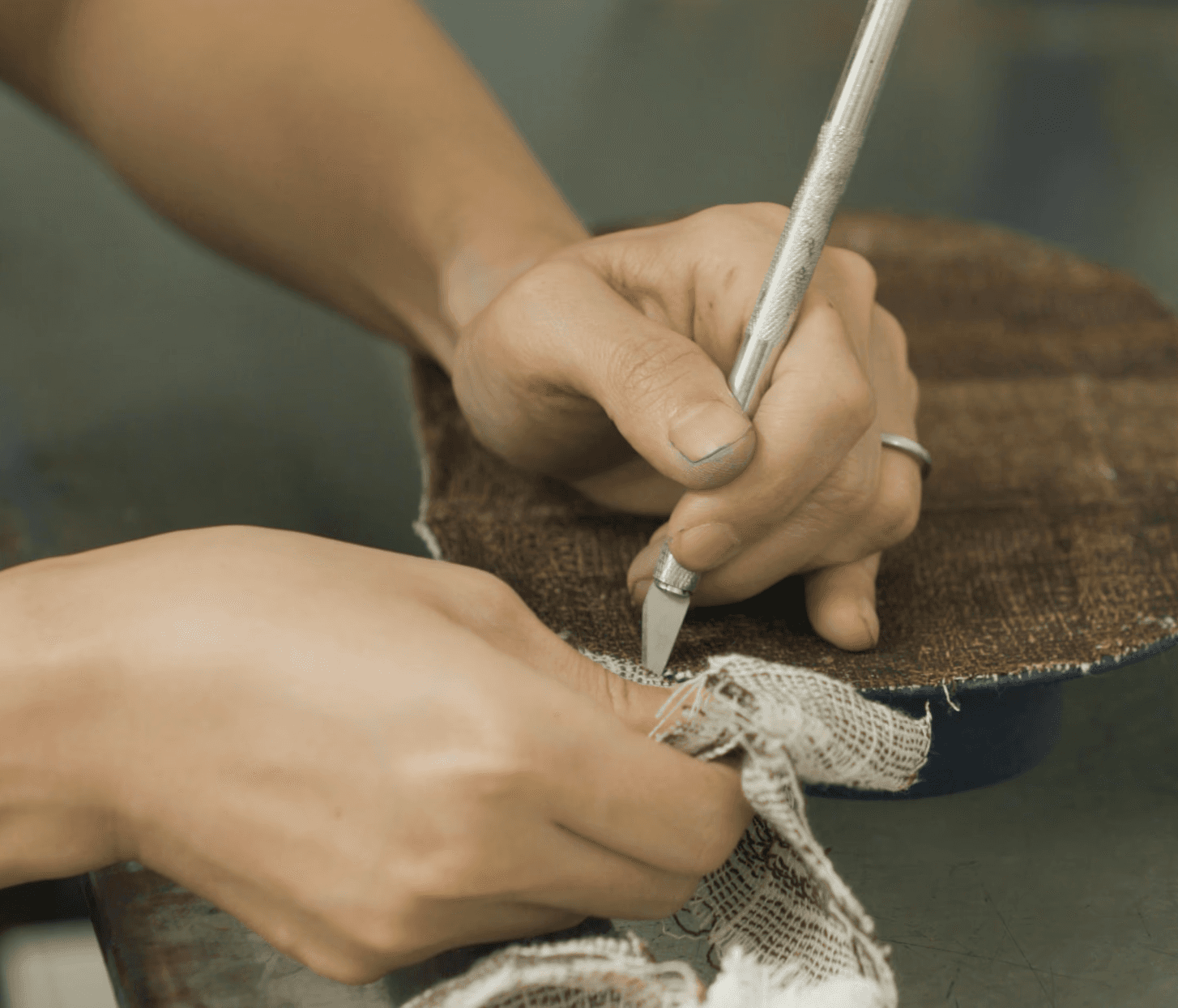
Pyeon’s process begins by refining the wooden form. A thin layer of raw lacquer—saengchil—is applied to enhance durability and resistance to humidity. Cloth infused with a mixture of lacquer and glutinous rice paste is adhered to the surface to fill gaps and prevent warping. A mixture of ocher and lacquer, known as tohoe, is then spread to smooth and strengthen the surface, followed by multiple coatings of raw and black lacquer to create a dense, luminous finish.
Pyeon describes this layered process as one in which “time becomes color.” “Each stroke of lacquer is a layer in itself,” she explains. “As these layers accumulate, they form depth—like sediment building meaning over time.”
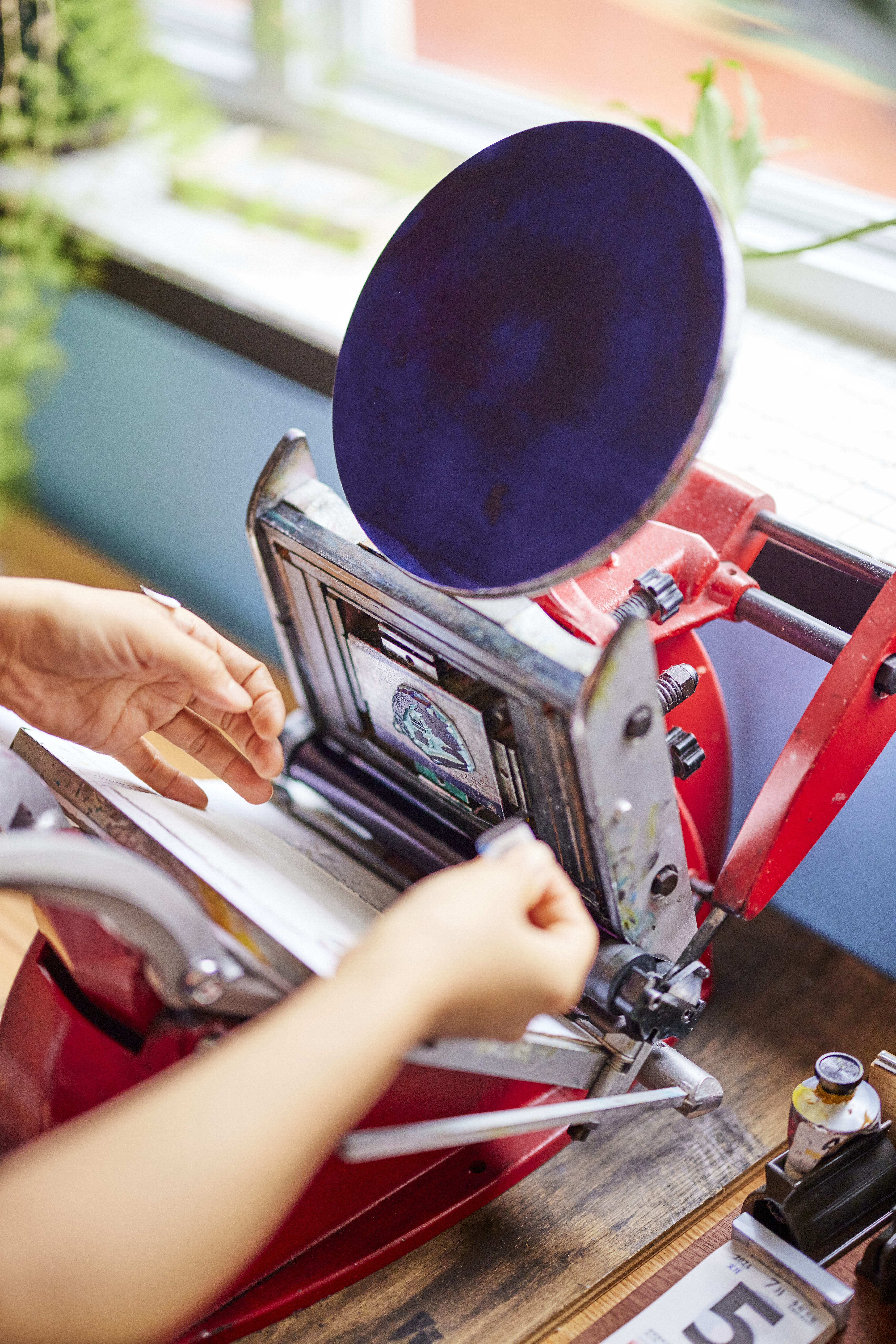
On the final surface, she employs her signature stamping technique, imprinting subtle reliefs and tonal variations that evoke both precision and intuition. The result is a tactile resonance—a quiet pulse of color and texture within a minimalist form.
Lightness and Strength: Experiments in Form
Among Pyeon’s recent explorations, the dry lacquer (geonchil, 乾漆) technique stands out. Traditionally, it involves soaking fabric in a mixture of lacquer and glutinous rice paste, layering it repeatedly, and allowing it to dry to form a freestanding structure. The outcome is astonishingly lightweight yet strong. Pyeon reinterprets this tradition with an experimental twist.
“I position thin wooden fragments vertically, wrap them in heat-shrink film, and apply heat so the film compresses, generating new three-dimensional forms,” she explains. The process yields unpredictable geometries—transforming planes into sculptural volumes where tension and organic rhythm coexist.
Through “inevitable forms born from chance,” she seeks to expand the expressive potential of traditional materials, bridging the boundaries between craft, design, and sculpture. Her dry lacquer works are a dialogue between accident and control, merging the language of heritage with the vocabulary of contemporary design.
Harta – Craft as a Way of Living
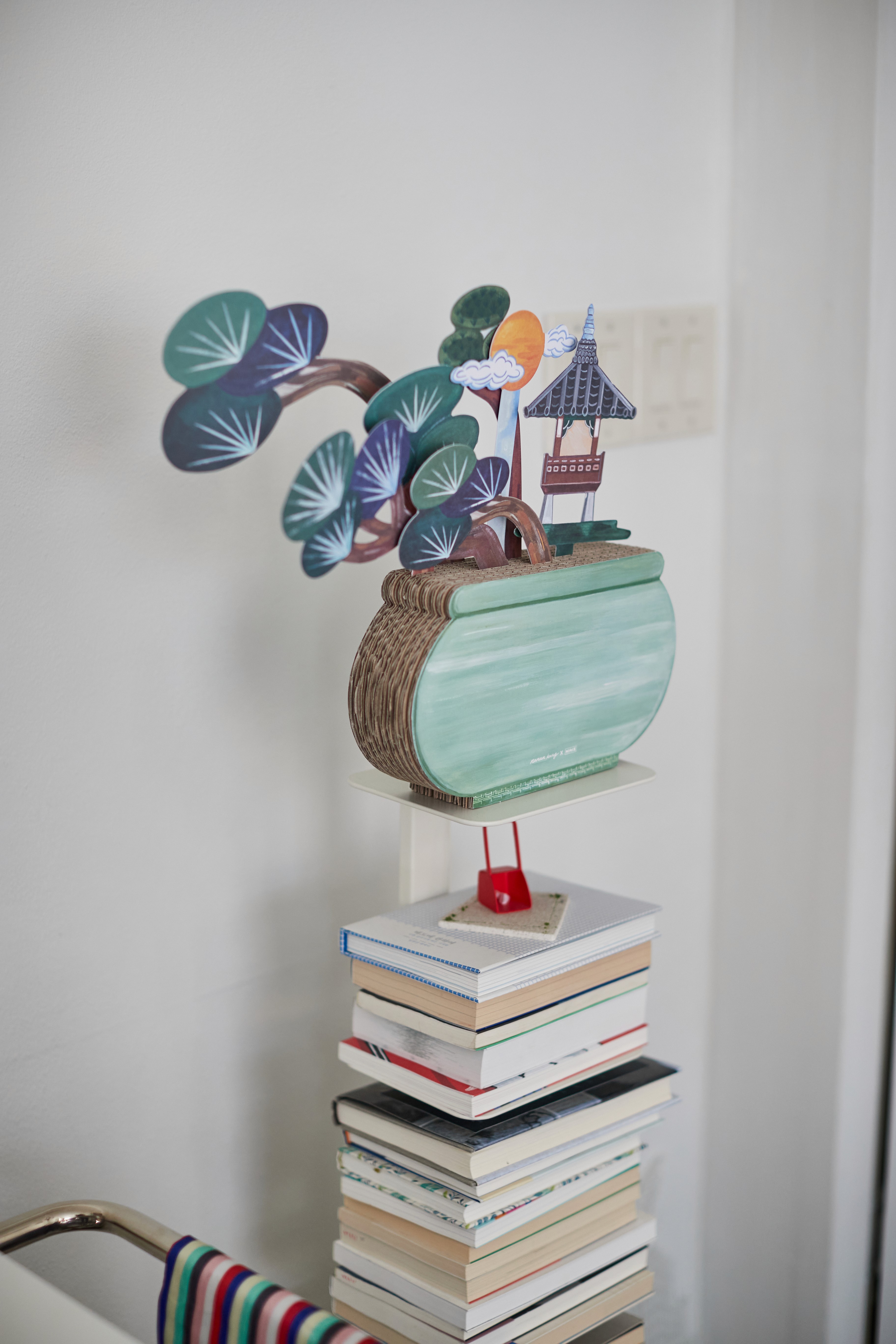
In 2019, Pyeon founded her own brand and studio, Harta, dedicated to reinterpreting Korean lacquerware through a modern lens. Based on traditional techniques yet refined through personal innovation, Harta presents a collection of handcrafted living objects—from small concave dishes to plates and soban tables—under the concept “diverse colors within simple forms.”
“While working with metal, I was fascinated by the versatility of lacquer as a medium,” she recalls. “My initial interest was in coloring metal surfaces, but studying Oriental painting naturally led me to bring painterly qualities onto lacquer.” Harta embodies the vision of “a new everyday life crafted by the artist.”
To Pyeon, craft is not mere ornamentation; it is a tactile bridge between life and perception. A single dish on a dining table, a lacquered object in a room— each alters the atmosphere of space through color, texture, and light. That transformation, she believes, defines the role of contemporary craft.
Color Formed Through Layers of Time
Pyeon’s work continues to change with time. Each layer of lacquer—initially dark and solid—matures into a deeper, more resonant tone as years pass. She calls this evolution “the chromatic journey of time.” In her first solo exhibition, Lacquer in Bloom (2020, Hue Craft), she presented wooden vessels meticulously sanded and dried twelve times, each coated with successive layers of lacquer. Her original stamping method added depth and painterly nuance to ultra-lightweight forms—many weighing under 200 grams.
“For me, what happens after completion matters even more,” she says. “Light, air, and the warmth of hands gradually alter the surface. That change is not decay—it’s a record of time, proof that the object is alive.” Her view redefines lacquer as more than a medium of restoration; it becomes a living art that evolves with time, inviting viewers to witness the interplay between duration, material, and touch.
Sojung Pyeon’s lacquerwork is not a mere reproduction of ancient methods. It glows where the layers of tradition and modernity, material and emotion intersect. Her works are composed through the patience of repetition and the dialogue between human hand and natural substance. The brush marks on lacquered surfaces are not traces of labor—they are the grain of time itself, the story of light shaped by touch.
By preserving the essence of tradition while bringing it into the rhythm of contemporary life, Pyeon reveals the possibility of craft as living art. Her lacquer objects do not simply hold color; they hold the memory of time—quietly, enduringly, beautifully.
More Article