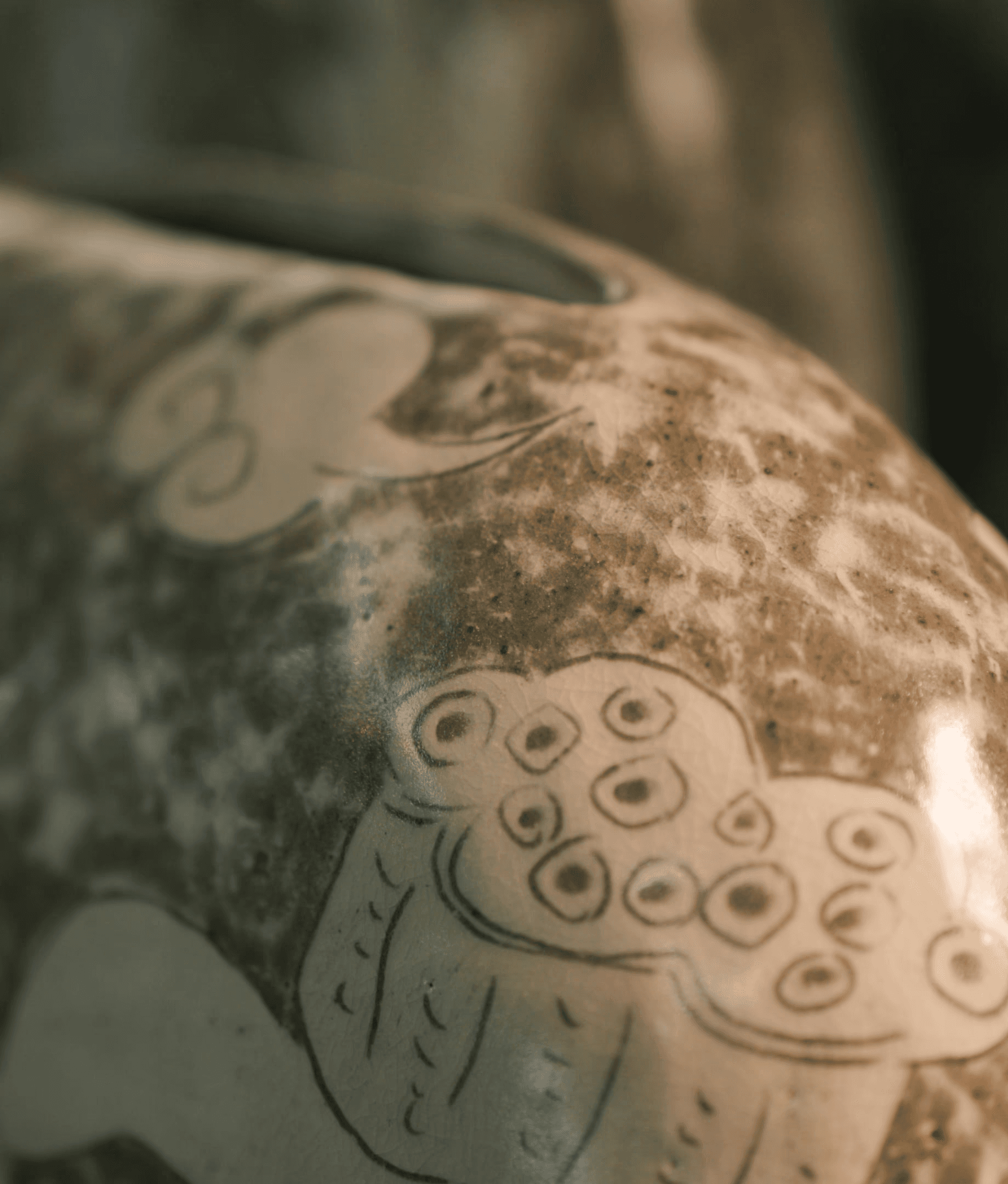
Na Kyung-soo’s images always begin with the act of making. Her work is less about drawing and more about a kind of structural experiment—a material event born from the encounter of line, color, paper, and ink. The pressure of her hands, the spread of pigment, and the texture of paper operate as a language of their own, one that crosses the boundaries between painting, craft, printmaking, and design. Na is not so much a draughtswoman as a craftsperson who refines images through touch and repetition.
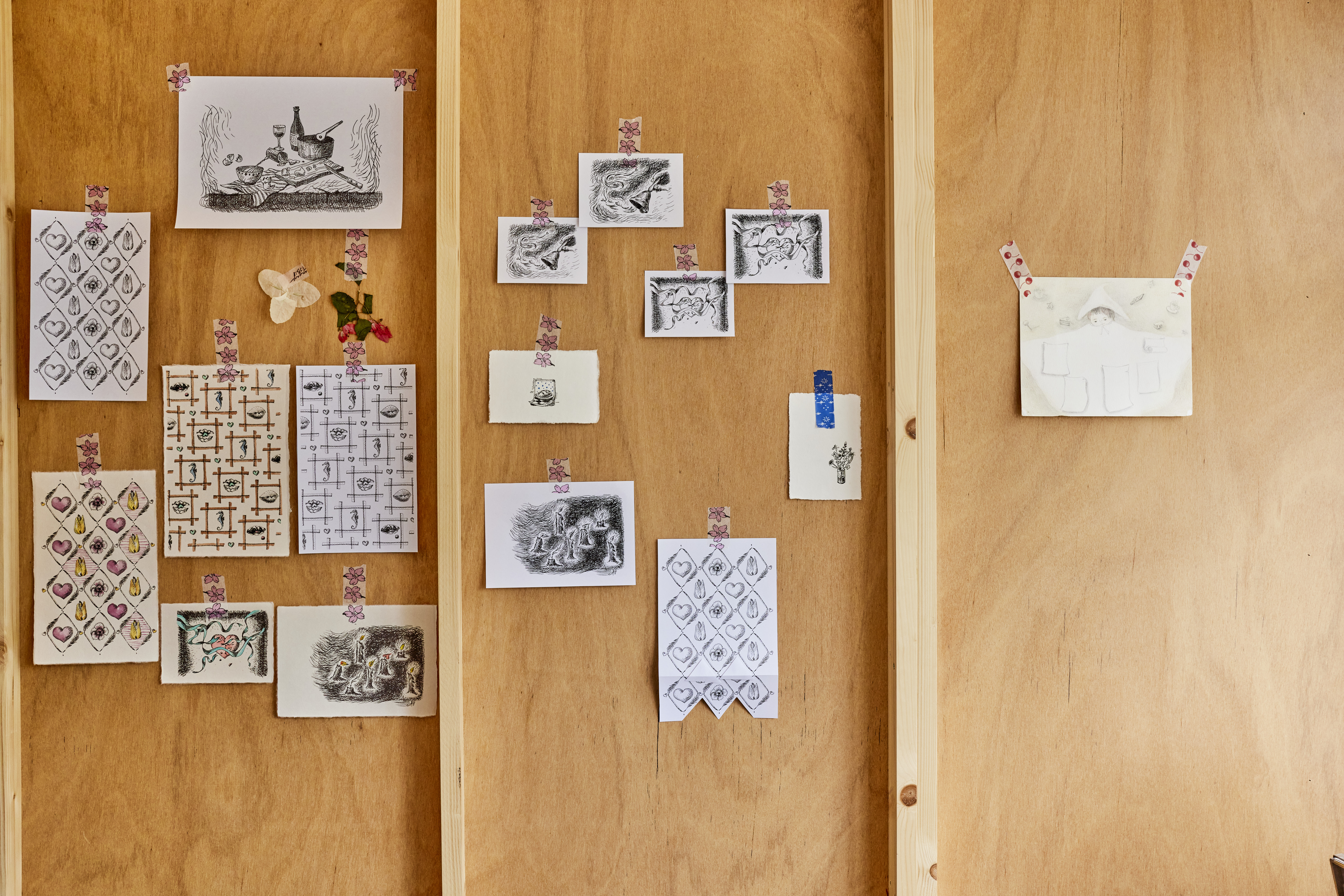
Images Crafted Through Sensation
Her illustrations follow a trajectory completely opposite to the rapid production and circulation of digital media. She returns reproduction to a question of sensation rather than technology. Through subtle variations in printing, traces of the hand, and incidental frictions, she reveals not “a single image,” but “multiple images, each born as a unique existence.”
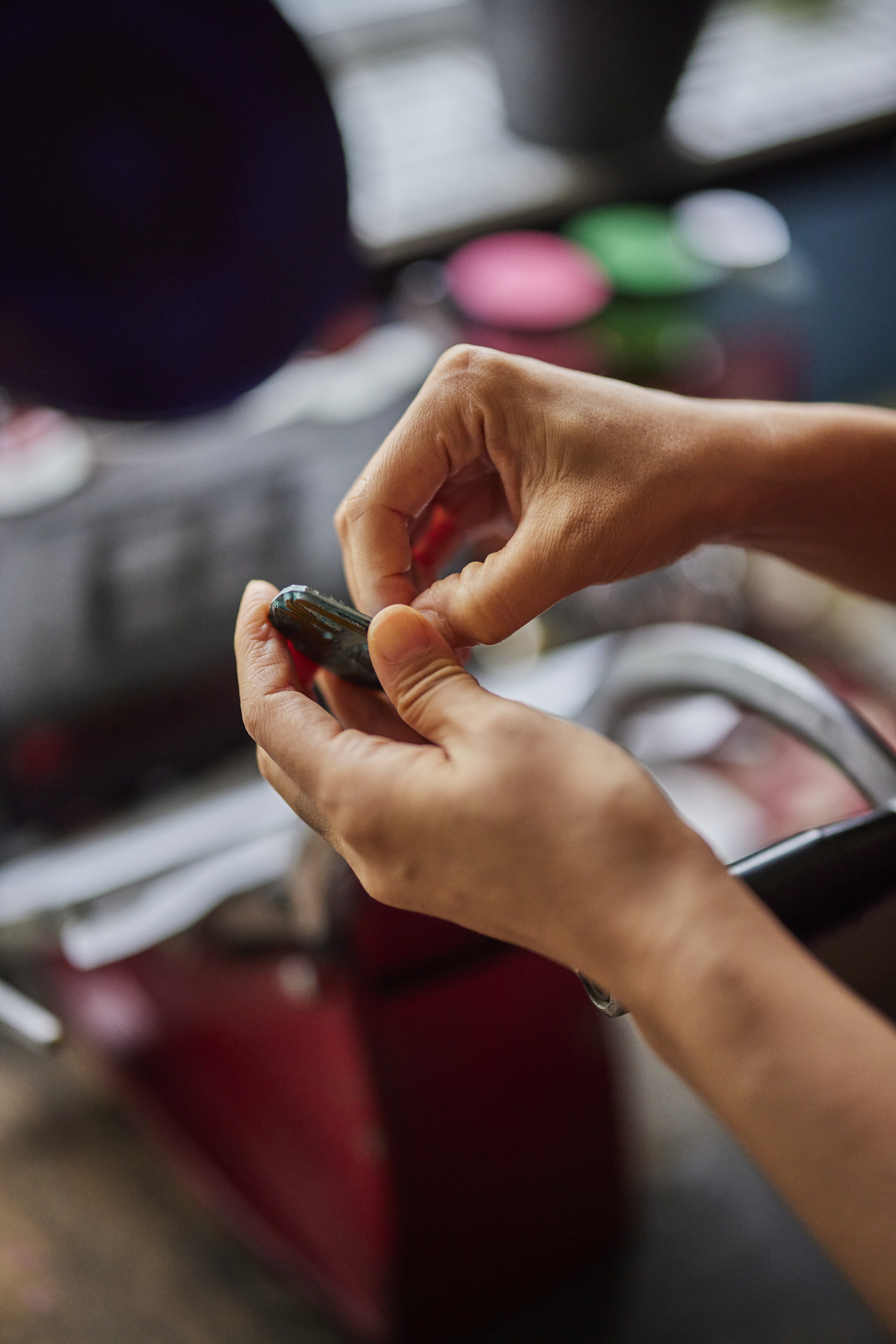
For Na, illustration is not the outcome of mass reproduction but the result of repeated and nuanced sensory variations. “In the printing process, perfect control is impossible. A slight difference in pressure changes the density of color, and sometimes the pigment seeps into the paper unexpectedly. But that unpredictability is what I love most—it gives the work its vitality.” Her material-centered practice reads as an act of recovering the memory of the hand within a visual environment dominated by the screen.
Between Printing and Painting
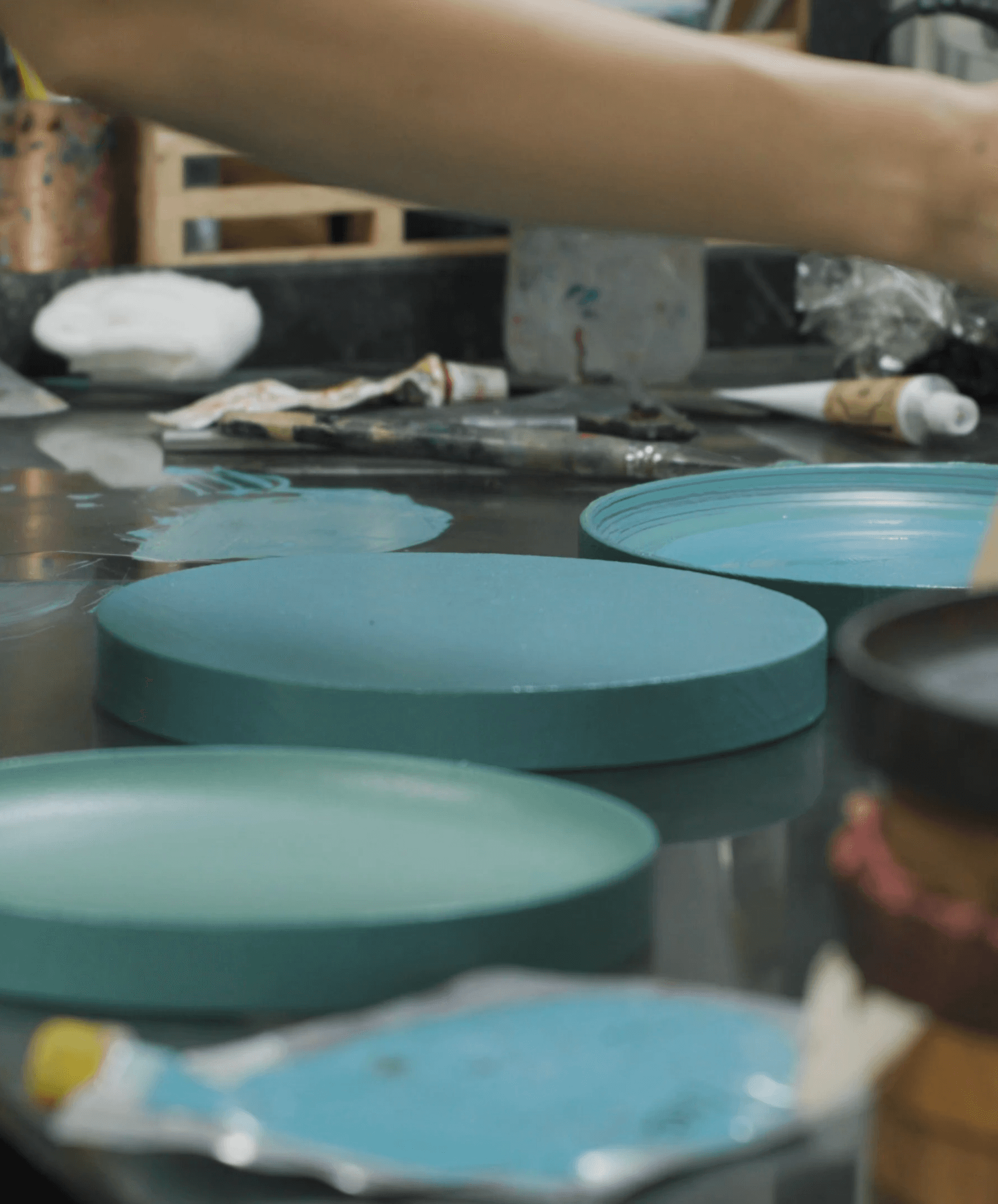
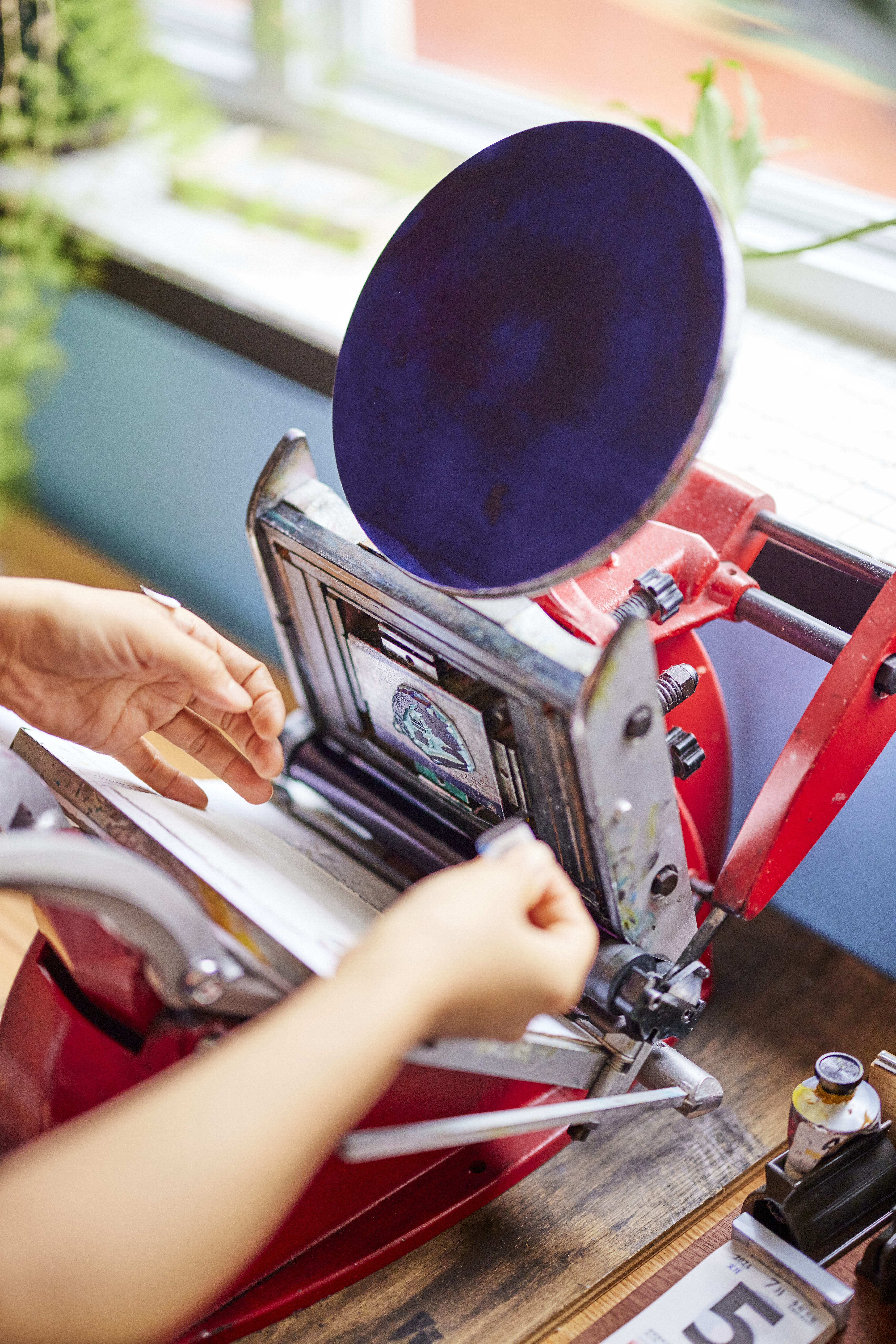
Trained in sculpture, Na studied furniture and interior design in Milan, exploring the relationship between vision and structure. Ultimately, she returned to what she calls the “language of the hand.” Employing the traditional metal letterpress technique as her primary medium, she experiments along the border of printing and painting. This process is not about duplicating images but about shaping form through the physical tension between paper and pressure. Every gesture of pressing, brushing, and stamping reflects her philosophy of designing through touch.
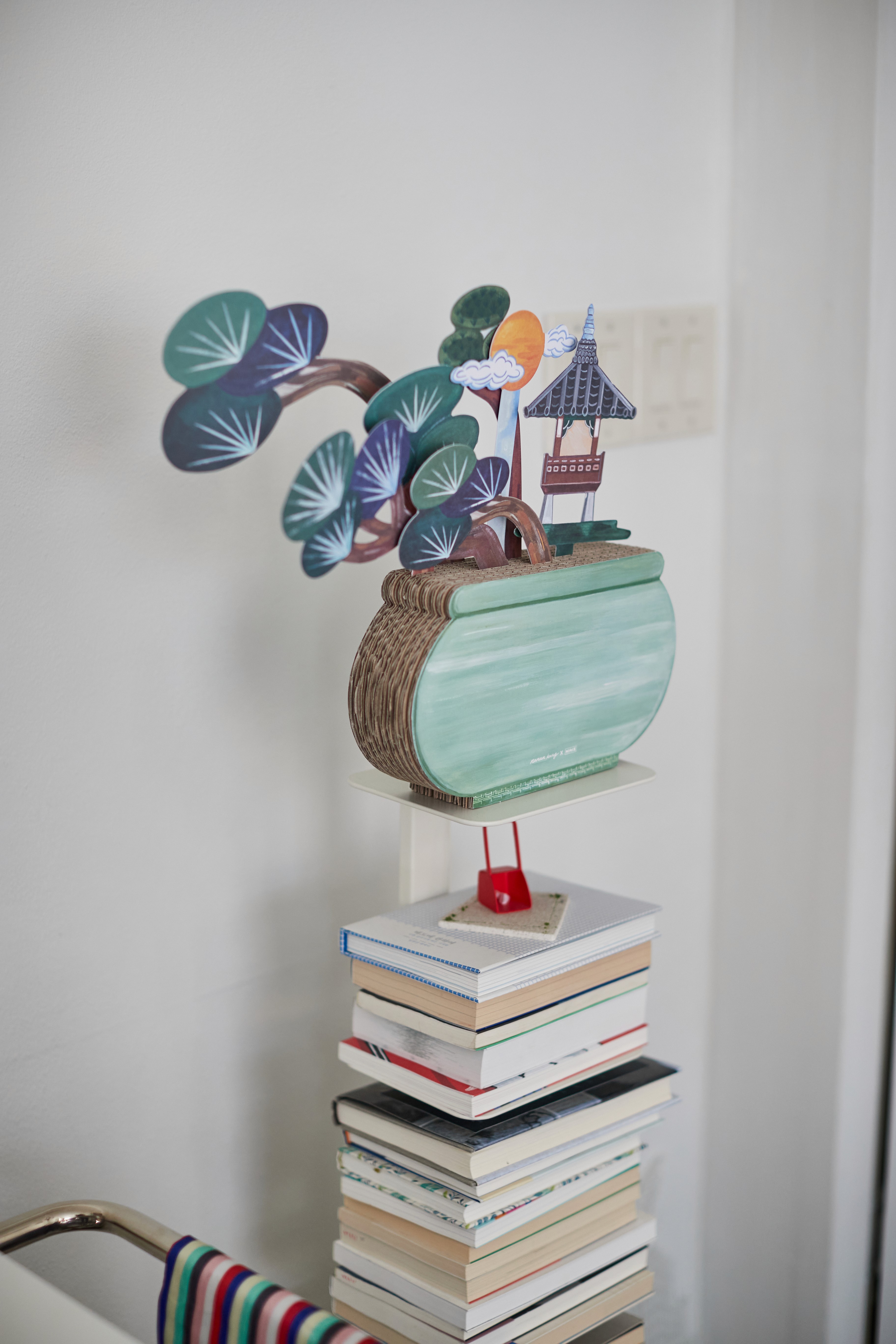
She often works with sunjih, a type of Korean handmade paper made from 100% mulberry fibers. When light passes through it, the fibers shimmer faintly, creating a depth that feels alive. On this surface, she arranges color, form, and space to construct a rhythm of perception. In her hands, hanji ceases to be a traditional material and instead becomes a site where sensation is inscribed—a sculptural world of texture and rhythm.
“What Does It Mean to Make an Image?”
Na’s compositions contain no explicit narrative. Instead, they are defined by structure and interval. Planes and lines are minimal yet meticulously arranged; the density of color and the spacing of emptiness follow a measured rhythm. This rhythm invites the viewer not to read but to linger. Before conveying meaning, the work exists as a structure of sensation. Within this suspended rhythm, the viewer becomes aware of the act of seeing itself.
Her perspective differs from the designer’s controlled order or the painter’s free expression. Occupying the threshold between printshop and atelier, graphic design and painting, craft and experimental art, Na stands as a craftswoman of vision. Through repetition, pressure, blurring, and residue, she reconstructs the language of visual art. Her forms are precise like architectural plans, yet they always contain a trace of incompletion. Rather than aiming for perfection, she reveals the process through which form emerges.


Beyond the Traditional Role
Na Kyung-soo’s work shows that illustration can move beyond its conventional role of conveying visual messages to become an art form that explores the structure of sensation itself. She rejects images made for consumption and proposes images made for contemplation. The trace of the hand and the friction of print operate as a slow aesthetic—a mechanism that questions the speed of seeing. In an era of fast-consuming visual culture, she returns illustration to the world of material and time.
Her works quietly ask, “Have you ever truly seen an image, or merely brushed past it on a screen?” Na responds to that question through the language of the hand, the rhythm of printing, and the architecture of emptiness. And in that response lies a subtle direction for contemporary illustration—beyond function toward thought, beyond consumption toward sensation.

More Article