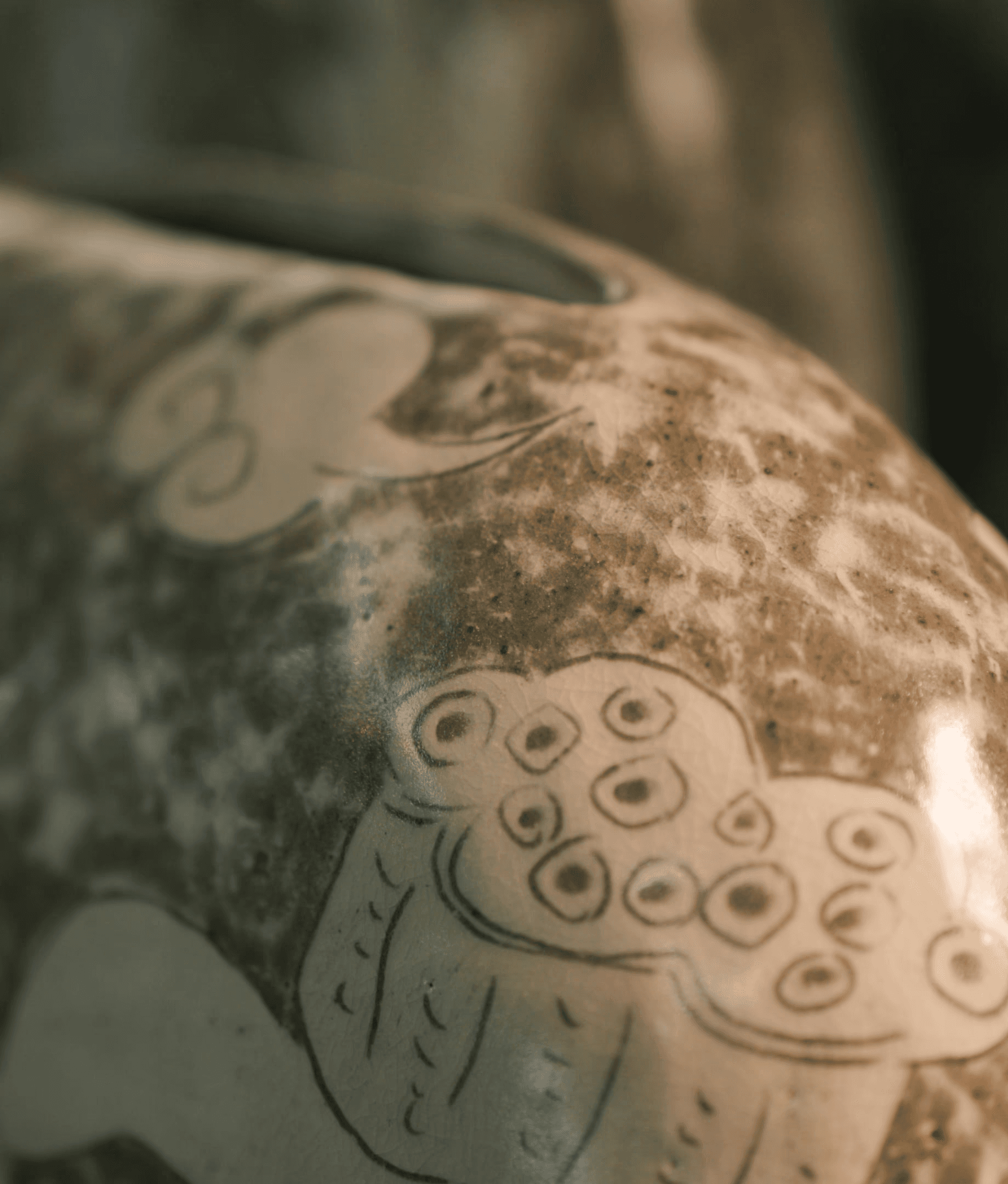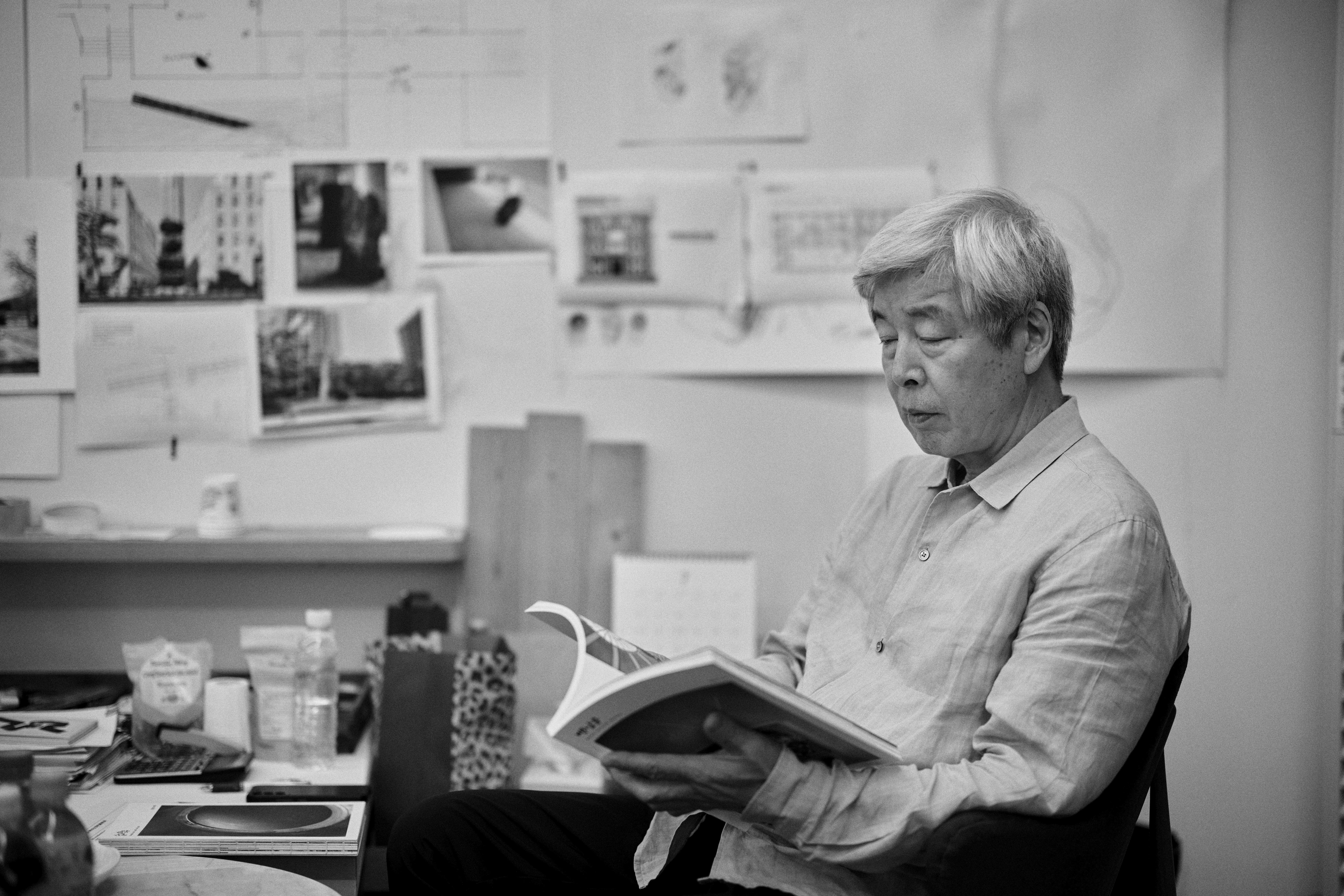
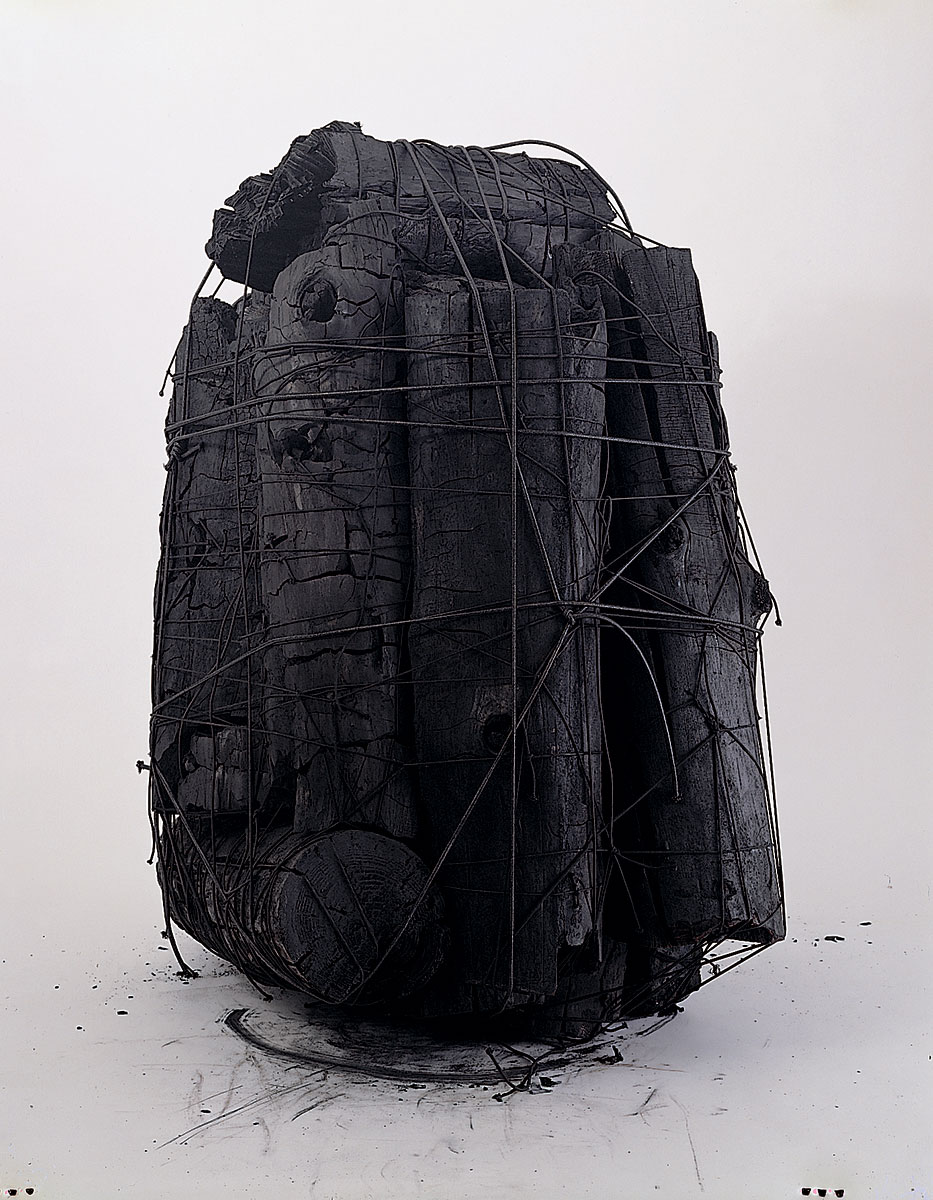
Lee Bae’s work begins with the residue of fire: the ‘charcoal’. Charcoal is the substance left when flames extinguish, yet within it remains the condensed trace of heat and time. The artist sees in that residue the energy of life and an inner light. “Working with charcoal is not simply using a material, but dealing with the essence left when life has burned,” he says.

Material Born from the Remnant of Flame
For Lee, charcoal is not a mere medium but a “mirror” through which he reflects himself, and a conduit of the soul. The composition of black points, lines and planes becomes on his surface both a painterly element and a philosophical language probing the roots of human existence. When he moved to France in the early 1990s, it was precisely in the unfamiliar that he began to examine “the essence of Korean-ness.” Rather than painting in acrylic or oil on canvas, he adhered, ground and rubbed charcoal, exploring its materiality and spiritual dimension in tandem.
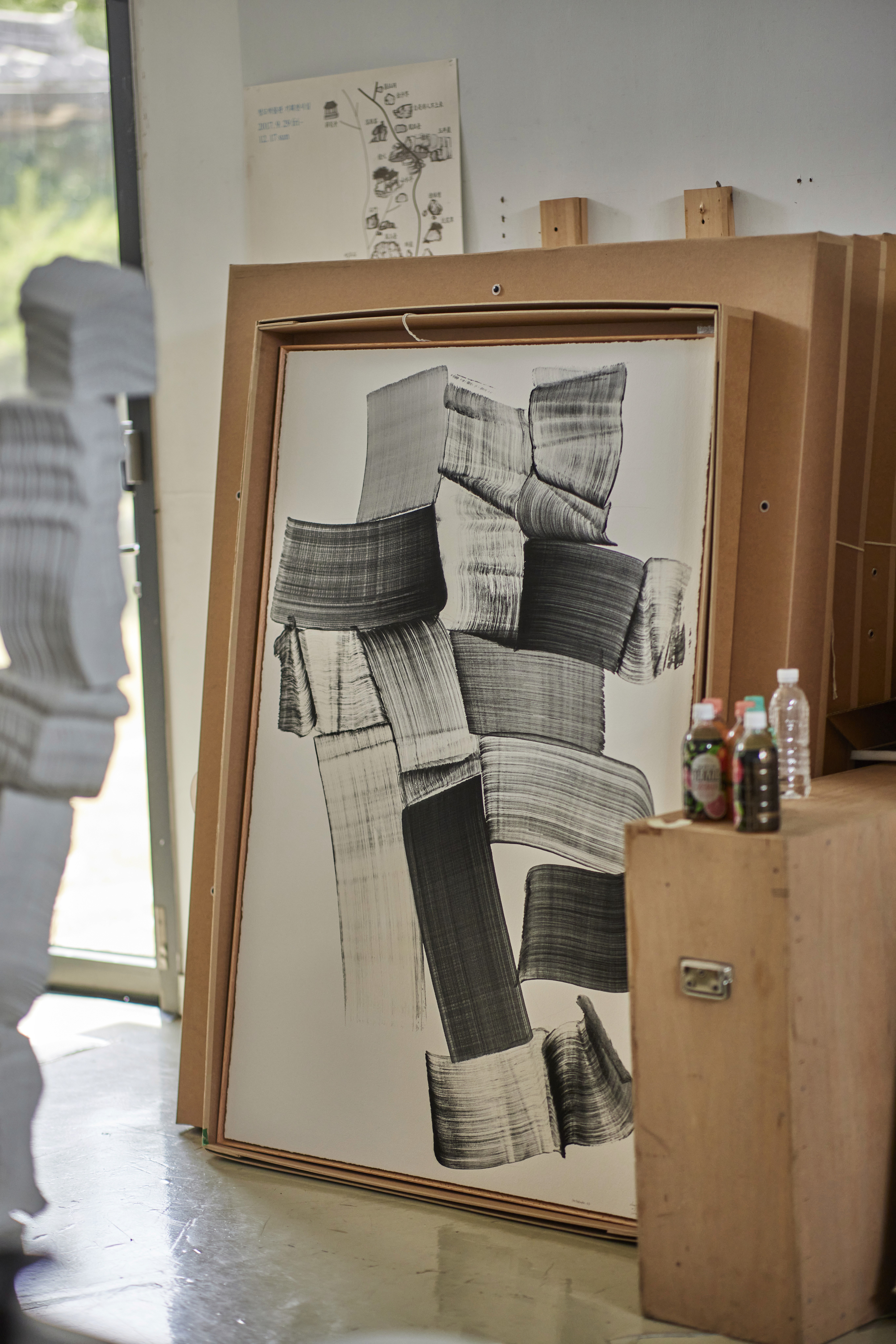
“When you paint Oriental ink painting, the first thing you do is grind the inkstick. I tried grinding charcoal, attaching it, rubbing it, polishing it… and gradually the work related to the material of charcoal became connected to body and mind as a single action.” For him, handling charcoal was both bodily movement and spiritual discipline. Just as in traditional brush ink painting the act of drawing becomes an exercise of mind-body unity, so too does charcoal become transformed through the body into spirit.
Transparent Black — Darkness That Holds Light
Lee discovered in charcoal’s darkness a “transparent black.” Black is not the absence of light but the deepest plane where all color and light might rest. He calls it “the place where light once rested.” His surfaces are not absolute night but filled with vibrations of light that seep from within. The black lives, as though breathing. This aesthetic sense derives from the Eastern ink painting tradition. He cites Jeong Seon (Gyeomjae) as an example: “In Gyeomjae’s paintings you can feel black that holds light. In it there is philosophy and human dignity.” For Lee the inkstick is not simply a tool but the record of spirit. From China’s Eight Eccentrics to Japan’s Hokusai, and Korea’s Jeong Seon, East Asian artists using ink were not representing the outward form of things, but the inner vitality of spirit. Lee’s charcoal continues that lineage—but rather than “painting,” he “builds layers of time and spirit.”
Body and Mind in Harmony — The Discipline of Charcoal
In literati painting using ink to depict orchids or bamboo, the act of painting is itself the unity of body and mind, a form of practice. Lee extends this concept through the materiality of charcoal. He focuses even on a single stroke or lump of charcoal, requiring the pressure of the hand and the rhythm of the breath to unite. “When you apply charcoal, your inner strength must transmit directly.
It’s not by thinking how to draw, but when the mind controls the hand that real work happens.” This attitude differs from Western oil painting or revisable working methods. His practice lies between spontaneity and discipline, between consciousness and the unconscious. It is both the act of handling material and the act of refining the self. Thus his work becomes painting yet sculpture, ink painting yet installation. Charcoal moves beyond the wall, occupying space, expanding into a total sensory field that includes light, shadow, smell and temperature.
Korean Spirit — Aesthetic of Restraint, Depth of Inner Life
Through his work Lee aims to reinterpret “Korean spiritualness” within the history of global art. For him, Korean aesthetics are defined by “inner restraint.” “When you look at the work of Yun Hyeong‑geun, paint has soaked into the cloth. Two different substances absorb one another, becoming one. A white moon jar or white porcelain gives the same feeling. What matters is not outward display but inner depth.”
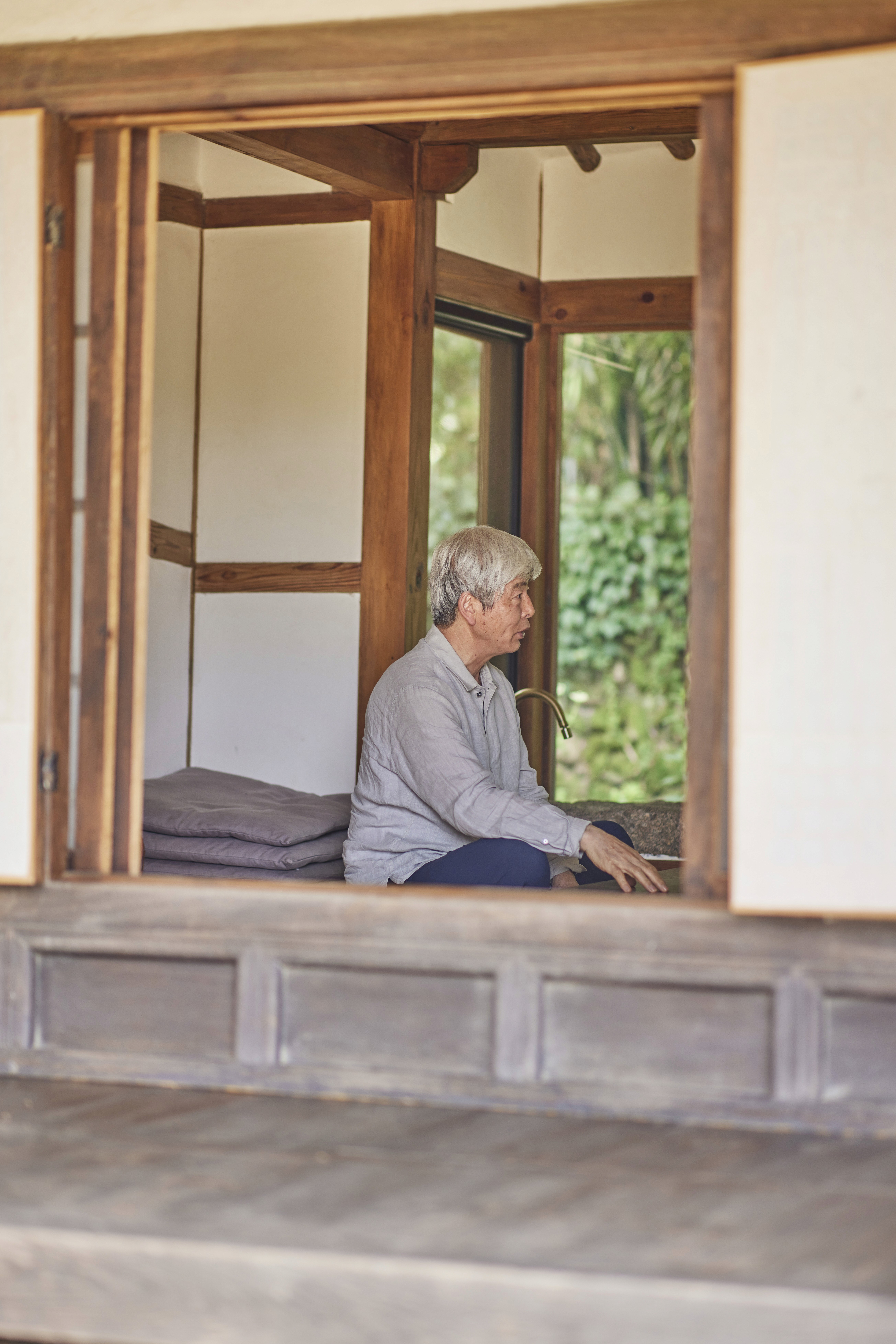
He describes the traditional Korean screen (hanok) facing his studio: “Our paper windows (changhoji) create a neutral space. They don’t directly reveal, yet they pull strongly. We shun outward display and instead raise the realm of the inner. That is the essence of our beauty.” Lee’s black directs us precisely toward that inner world. Eschewing flamboyant color, he uses disciplined darkness to express essence and emphasise the light of spirit. His “black (黑)” is the aesthetic of emptiness, of breath.

Archetypes of Culture and Universal Humanity — The Moon-House in Venice

At the 2024 Venice Biennale Lee presented the video-installation La Maison de la Lune Brûlée (“Moon House Burning”). The piece draws on a scene from his youth in Cheongdo: in a traditional wedding the bride leaps over charcoal embers placed before the groom’s house door. The artist interprets that scene as “fire and charcoal, light and shadow, the boundary of birth and demise.”
This ritual is not just Korean folk but expands to the universal rite of passage. Lee says “the archetype of culture connects to the universality of humanity.” Fire is purification and new beginning; charcoal is the medium that remembers it. La Maison de la Lune Brûlée is recognized as a major work in which Korean tradition is translated into contemporary expression—an art of time.
Charcoal for Lee is no longer simply “black.” It is the record of time, spirit, and interiority. His surfaces radiate light from within darkness. But that light is not visible glare—it is the rhythm of felt silence. In the black plane we feel transparency, rather than absence. “Within charcoal’s black there is light.
The trace left by fire is not darkness but the place where light once rested.” Lee’s art is thus the journey from “black (黑)” toward “brightness (明)”. It is a quest for the essence of human existence and an attempt to restore the “sense of spirit” that contemporary visual art has lost.

More Article