Spotlight
Lee Bae
Korea
Charcoal & Visual Artist
Spotlight
Lee Bae
Korea
Charcoal & Visual Artist
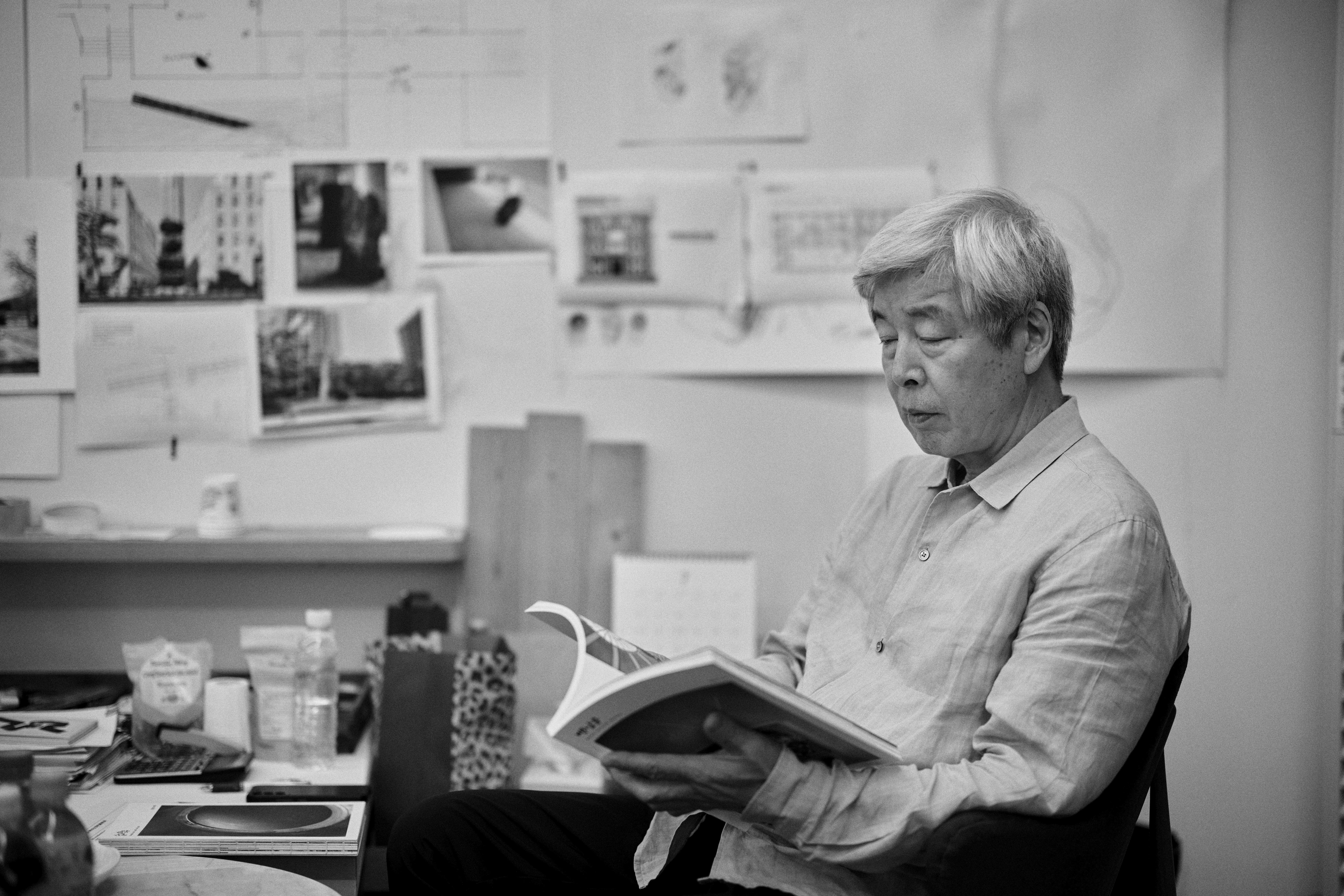
Born in 1956 in Cheongdo, South Korea, Lee Bae studied painting at Hongik University in Seoul before relocating to France in 1989. He has since developed a singular artistic practice centered on charcoal, transforming this material across painting, sculpture, installation and video. For Lee, charcoal is not merely a medium but an archive of fire, time and transformation. By subjecting wood to high-temperature kilns and then employing the resulting carbonised matter in his work, he creates surfaces where black is not emptiness but a reservoir of light.
Lee asserts that “black is not the absence of light but the place where light once rested.” His work traces the lineage of East Asian ink-painting and Korean monochrome abstraction, yet it transcends those traditions to propose a contemporary language of material and spirituality. Internationally exhibited and collected, Lee has created large-scale installations—such as a 21-foot high charcoal sculpture at Rockefeller Center (New York, 2023)—and his work resides in institutions like the Seoul Museum of Art, MMCA Gwacheon and Musée Guimet (France). Lee Bae stands as an artist who traverses the material limits of charcoal to explore existence, memory and cultural identity. His black becomes a tangible record of fire, a surface where restraint, depth and reflection converge.
Born in 1956 in Cheongdo, South Korea, Lee Bae studied painting at Hongik University in Seoul before relocating to France in 1989. He has since developed a singular artistic practice centered on charcoal, transforming this material across painting, sculpture, installation and video. For Lee, charcoal is not merely a medium but an archive of fire, time and transformation. By subjecting wood to high-temperature kilns and then employing the resulting carbonised matter in his work, he creates surfaces where black is not emptiness but a reservoir of light.
Lee asserts that “black is not the absence of light but the place where light once rested.” His work traces the lineage of East Asian ink-painting and Korean monochrome abstraction, yet it transcends those traditions to propose a contemporary language of material and spirituality. Internationally exhibited and collected, Lee has created large-scale installations—such as a 21-foot high charcoal sculpture at Rockefeller Center (New York, 2023)—and his work resides in institutions like the Seoul Museum of Art, MMCA Gwacheon and Musée Guimet (France). Lee Bae stands as an artist who traverses the material limits of charcoal to explore existence, memory and cultural identity. His black becomes a tangible record of fire, a surface where restraint, depth and reflection converge.
Enjoyed this story?
Subscribe to our newsletter
and get the next one first.
Newsletter