Spotlight
Lee Seok
Korea
Media Artist
Spotlight
Lee Seok
Korea
Media Artist
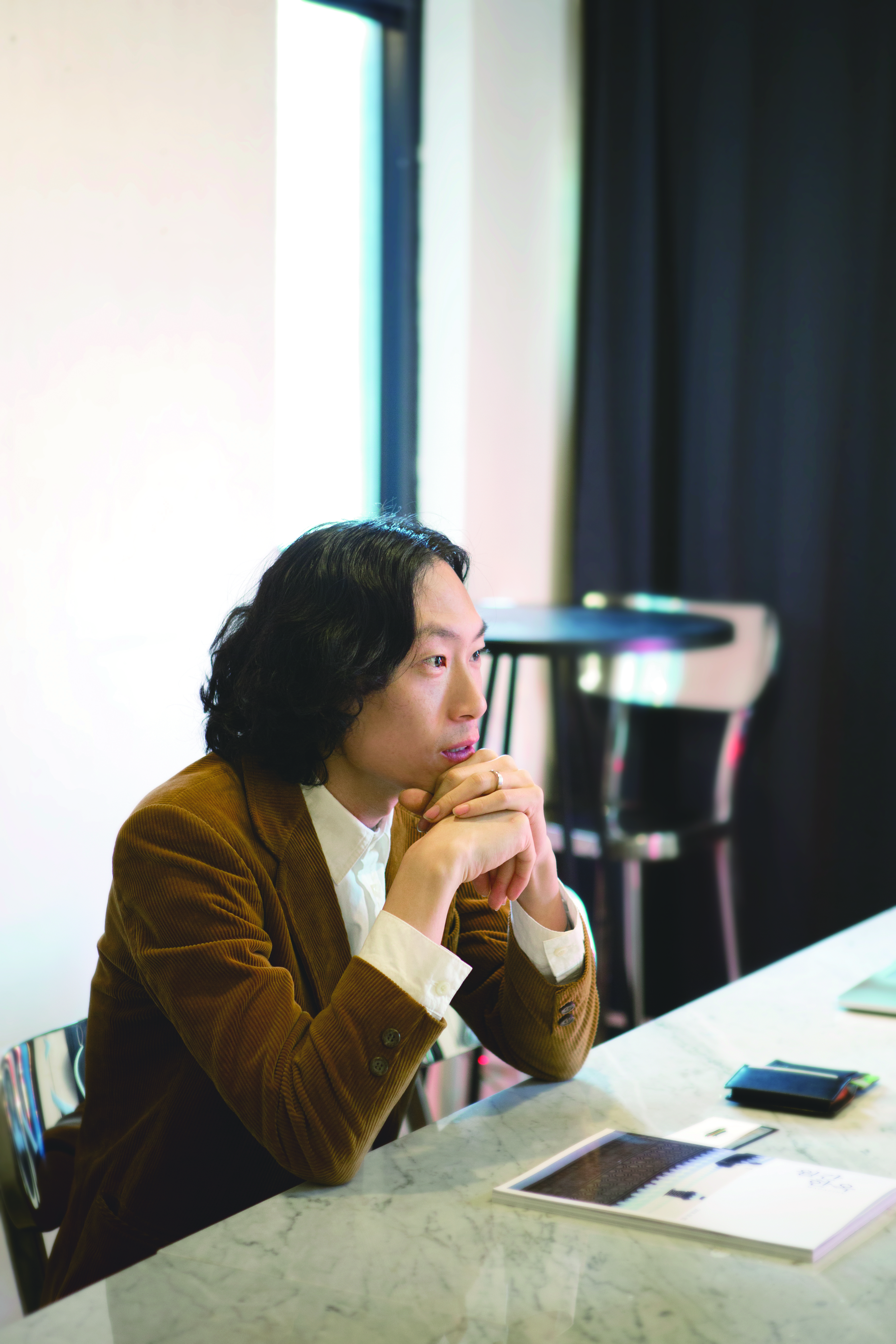
Lee Seok is a media artist who constructs visual experiences at the intersection of nature, technology, and human perception through the mediums of light and image. Since his invited media performance at the National Museum of Rome in 2014, he has explored projection mapping, media façade, and spatial installations as primary forms of practice.
His work goes beyond the mere realization of digital imagery to investigate the concept of the frame—as both a physical boundary and a philosophical condition—where the infinite quality of nature overlaps with the finite parameters imposed by human perception. In his solo exhibition FRAME: All the Boundaries of the Earth (2024), Lee visualized the dialogue between natural expansiveness and human limitation, deconstructing the border between reality and simulation through light, digital technology, and architectural media.
Lee’s artistic inquiry extends into the public sphere. He has staged media performances on the façades of cultural institutions, theaters, and public buildings, questioning whether technology can supplement or heighten the realm of human sensation. “Artificial intelligence may transcend human capacity,” he notes, “but it cannot replicate the act of feeling.” This belief underscores his view that experience and the body remain irreplaceable elements within technological art.
His works, situated between the physical and the virtual, aim to reawaken the viewer’s awareness of space, time, and perception. In an age of velocity and instant reproduction, Lee’s practice restores slowness and materiality to the act of seeing. The images he creates are not ready-made digital surfaces but structural experiments—images that breathe, flicker, and ask the viewer to pause.
Lee Seok’s media art is not about the domination of technology but about coexistence: between human and machine, light and material, thought and experience. Through these intersections, he envisions a poetic, humanistic form of media that expands beyond spectacle toward reflection.
Lee Seok is a media artist who constructs visual experiences at the intersection of nature, technology, and human perception through the mediums of light and image. Since his invited media performance at the National Museum of Rome in 2014, he has explored projection mapping, media façade, and spatial installations as primary forms of practice.
His work goes beyond the mere realization of digital imagery to investigate the concept of the frame—as both a physical boundary and a philosophical condition—where the infinite quality of nature overlaps with the finite parameters imposed by human perception. In his solo exhibition FRAME: All the Boundaries of the Earth (2024), Lee visualized the dialogue between natural expansiveness and human limitation, deconstructing the border between reality and simulation through light, digital technology, and architectural media.
Lee’s artistic inquiry extends into the public sphere. He has staged media performances on the façades of cultural institutions, theaters, and public buildings, questioning whether technology can supplement or heighten the realm of human sensation. “Artificial intelligence may transcend human capacity,” he notes, “but it cannot replicate the act of feeling.” This belief underscores his view that experience and the body remain irreplaceable elements within technological art.
His works, situated between the physical and the virtual, aim to reawaken the viewer’s awareness of space, time, and perception. In an age of velocity and instant reproduction, Lee’s practice restores slowness and materiality to the act of seeing. The images he creates are not ready-made digital surfaces but structural experiments—images that breathe, flicker, and ask the viewer to pause.
Lee Seok’s media art is not about the domination of technology but about coexistence: between human and machine, light and material, thought and experience. Through these intersections, he envisions a poetic, humanistic form of media that expands beyond spectacle toward reflection.
Enjoyed this story?
Subscribe to our newsletter
and get the next one first.
Newsletter