Clay does not speak, yet within it, time leaves its trace.
Korean ceramic artist Huh Sangwook, known for reinterpreting the traditional Buncheong technique, transforms this silent passage of time into form. The Buncheong he shapes is more than a vessel; it is a living surface — its carved lines, subtle fissures, and contrasts of silver and cobalt revealing a dialogue between time and material.
Building upon the traditional bakji (incised slip) technique and enriching it with silver inlay, cobalt-blue (cheonghwa), and iron-brown (cheolhwa) decoration, Huh bridges tradition and contemporaneity. In his hands, Buncheong becomes not a static object but a breathing narrative — one that responds to light, space, and the slow rhythm of change.
At the Boundary of Tradition and Experiment
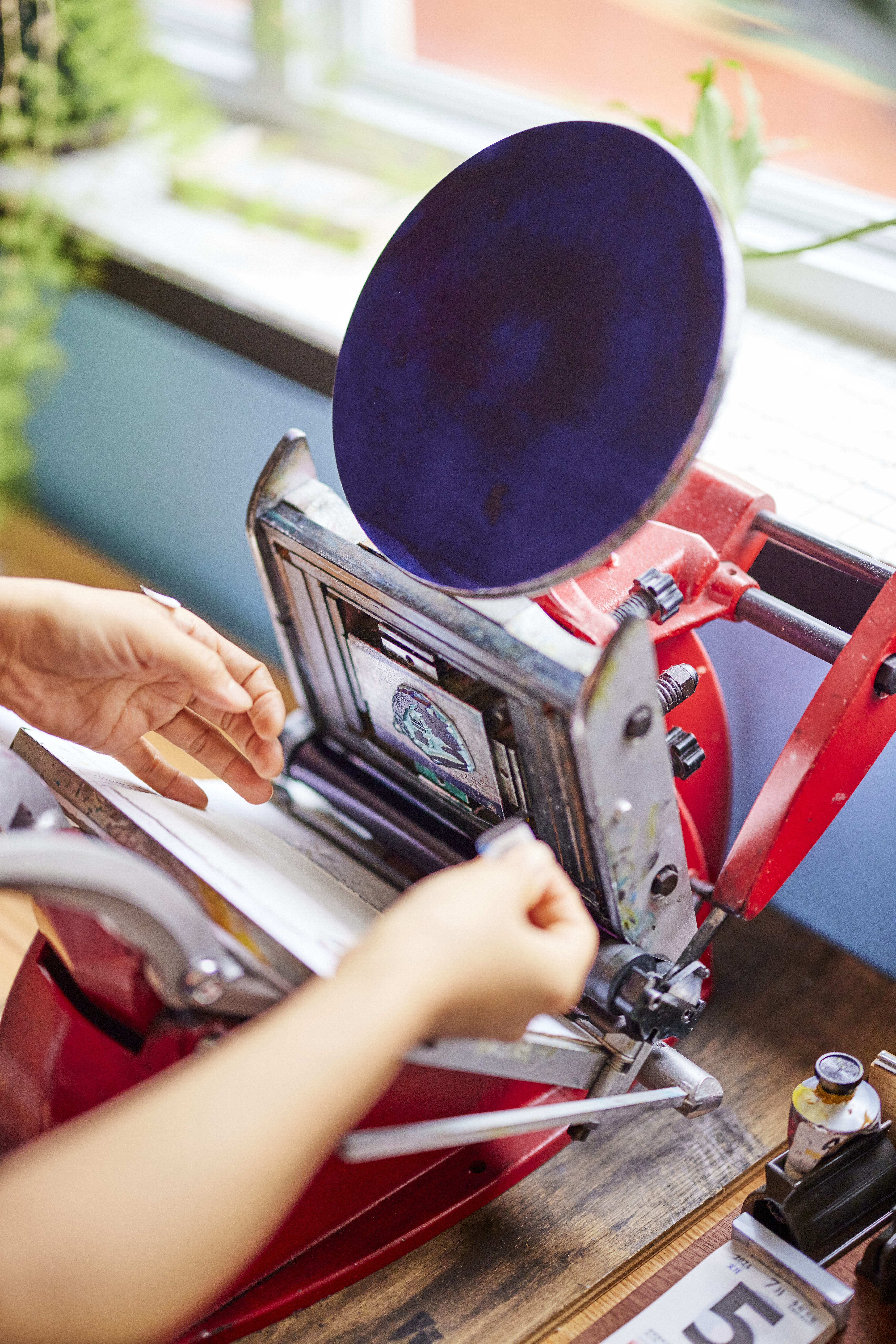
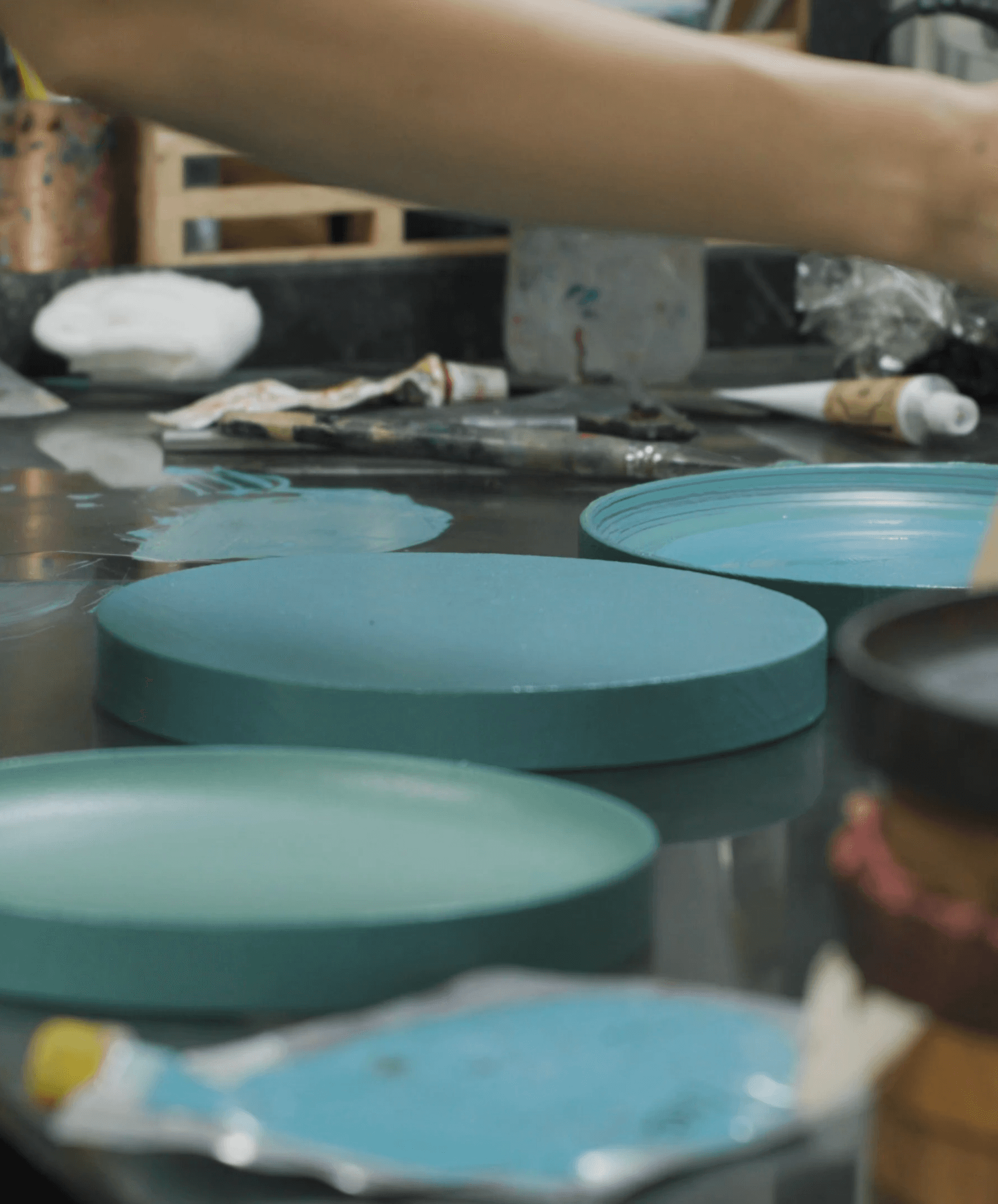
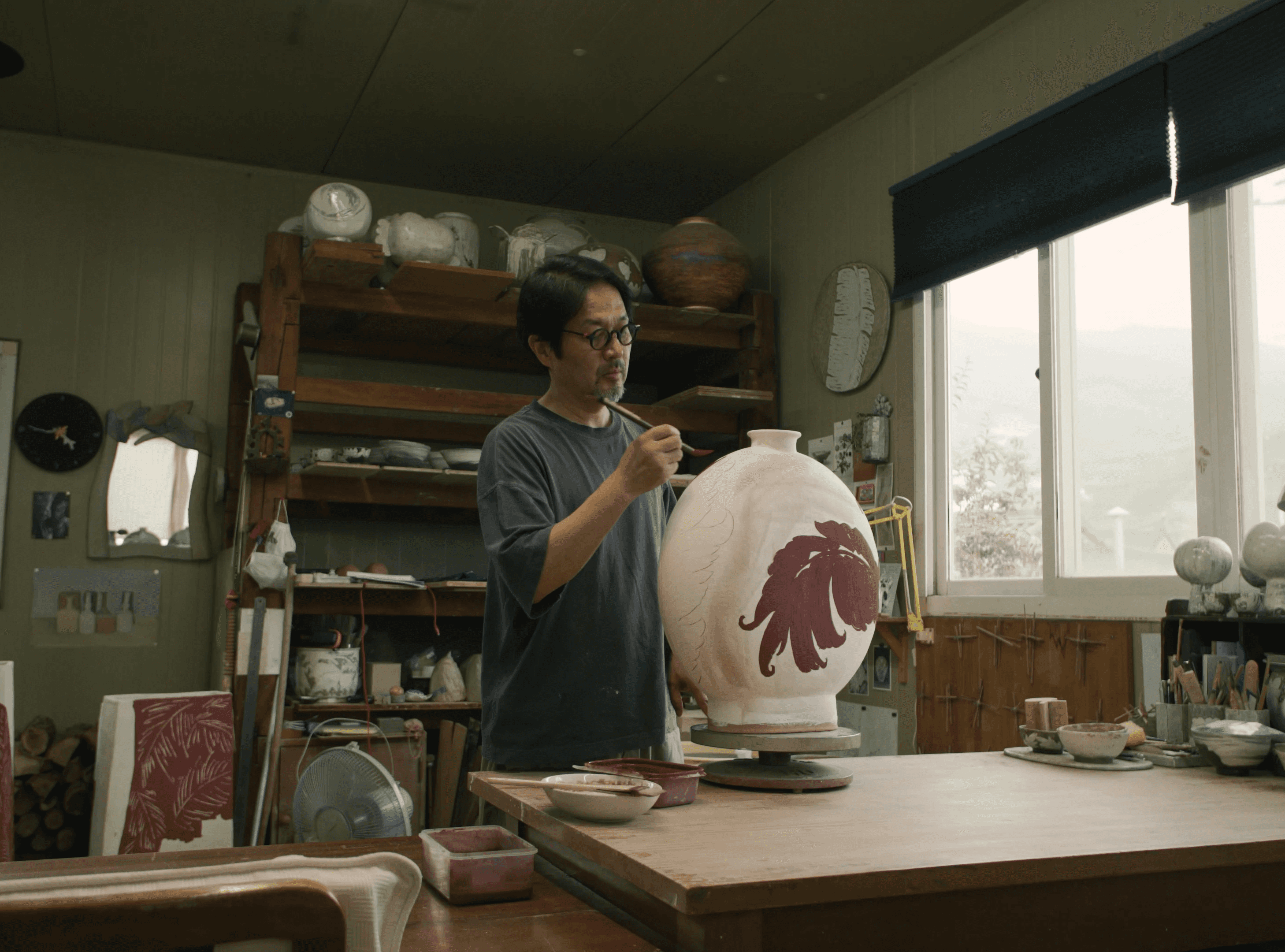
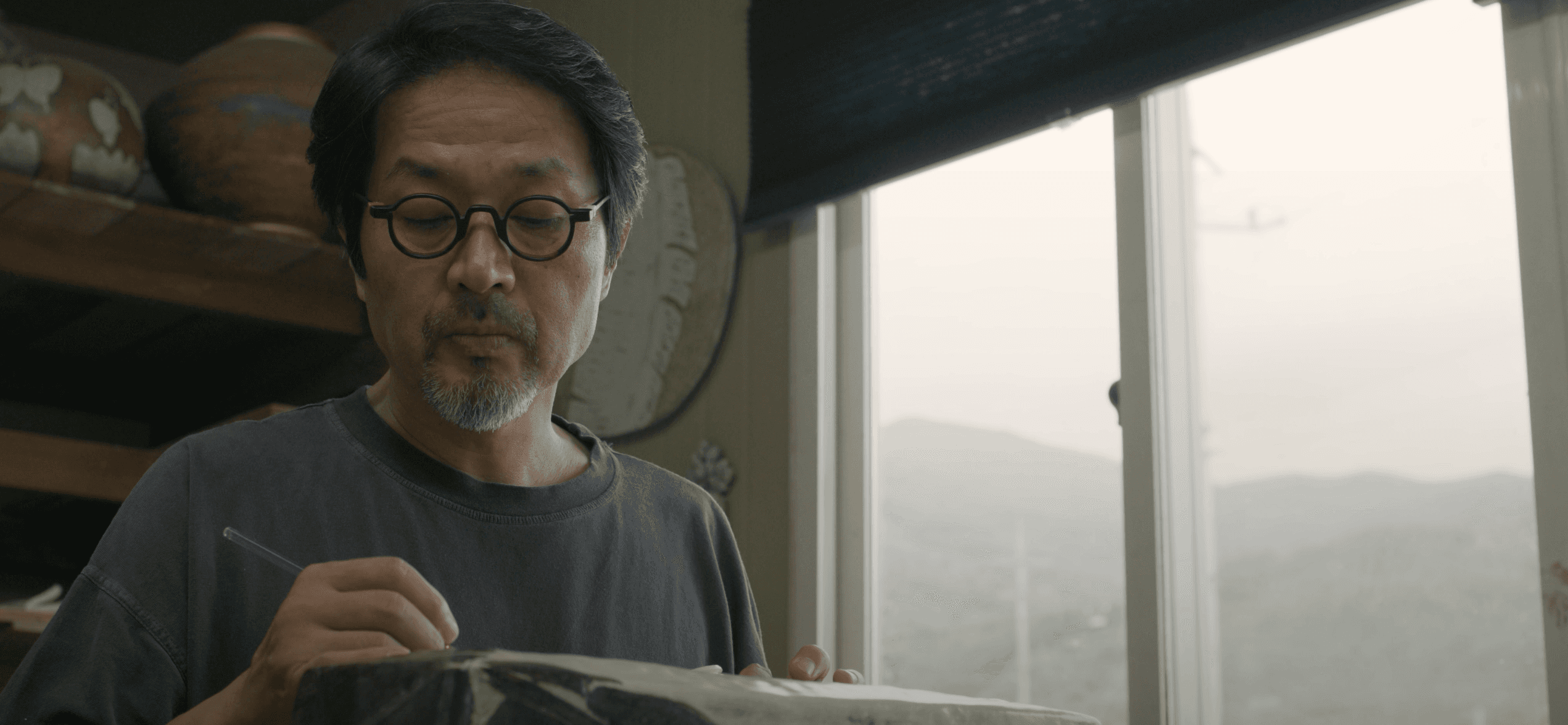
Huh’s work begins with bakji, an age-old Korean pottery method. After forming a vessel from clay, he coats it with white slip (baekto hwajangto), lets it dry, then carves away the surface to expose the darker body beneath.
Over this base he adds metallic luster, cobalt, or iron oxide, creating a new visual language. Rather than simply reproducing tradition, he embraces the tension between different materials. This process is far from decorative. When two clays of differing composition meet, they contract and react, inviting moments of accident and unpredictability.
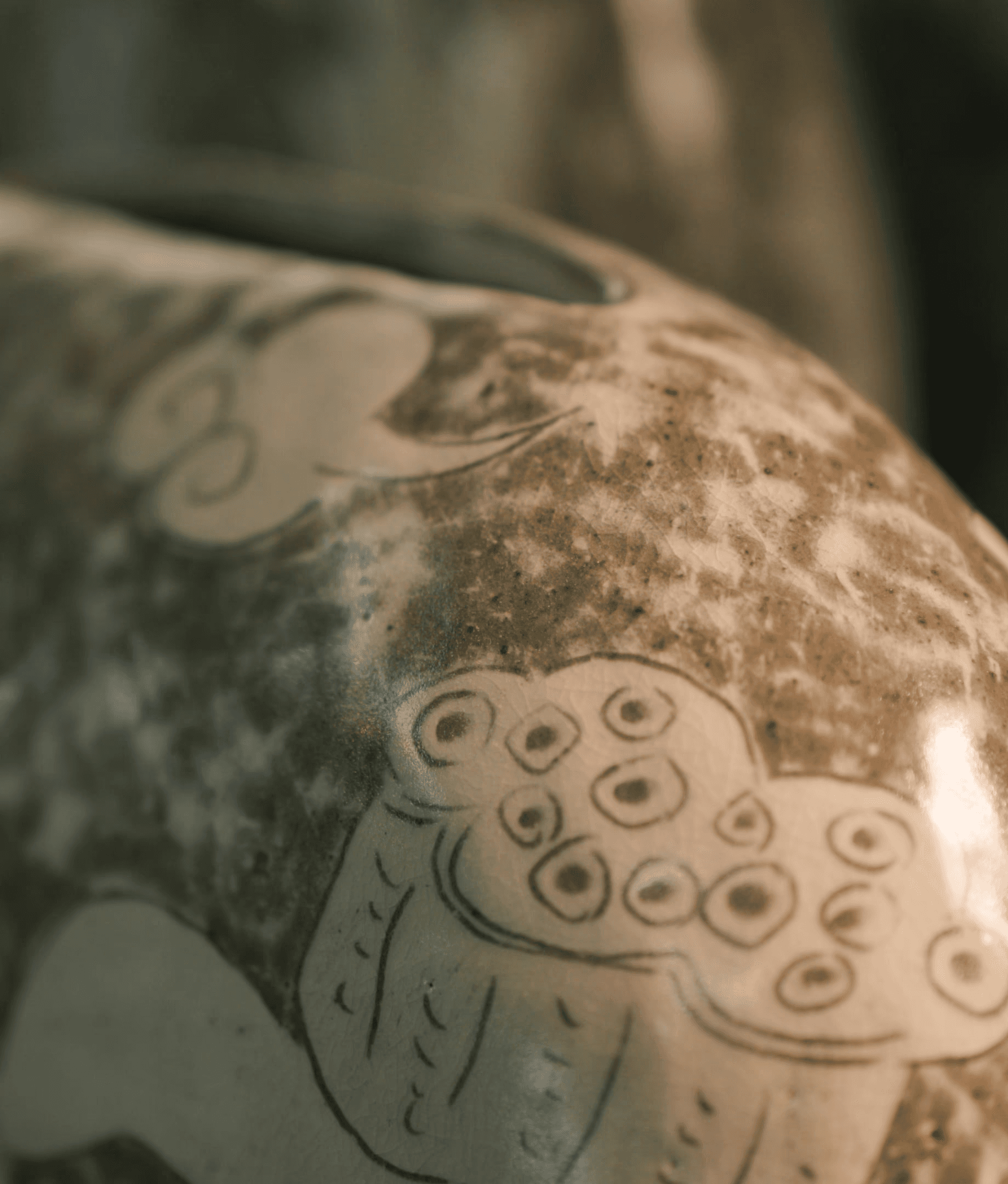
Huh refines this unpredictability, turning it into structure. He often says, “The beauty of Buncheong lies in imperfection — in the harmony born from conflict.” “When a dense, iron-rich clay meets a coating of pure white slip, the contrast in their nature causes peeling or cracking. But I find those fractures beautiful — they’re where naturalness emerges.” For him, such “harmony within imperfection” defines the soul of Buncheong. A crack is not a flaw but a trace of life — a record of time as it completes itself.
When Clay Speaks — A Dialogue of Material and Time
To Huh, clay is not merely material but a medium of memory. In his works, clay holds seasons quietly and remembers the warmth of the hand. On the surface of Buncheong, time becomes substance, and substance acquires emotion. He reflects, “When I watch the silver tones of Buncheong change over the years, I find myself wondering — what was its first hue, and how will it look years from now?” This contemplation moves beyond observation. It becomes a way of experiencing art through the flow of time.
In the exhibition Buncheong Diary (Handle With Care, Seoul), Huh described his process as “writing a diary with Buncheong.” There, works featuring rhythmic dots — his Staccato series — were shown alongside motifs of birds, lotus flowers, and carp, combining memory and nature on the ceramic surface.
In Buncheong Play, another exhibition, he introduced blue-toned works with fish, tigers, and floral imagery — mixing folklore and imagination to infuse the traditional surface with contemporary playfulness. For Huh, Buncheong is not restoration but re-creation: a living canvas where time itself paints new layers of color and texture.
His Buncheong remains “alive” long after completion. Depending on light, humidity, air, and touch, its tones shift and deepen, recording a quiet topography of time. To Huh, this evolving surface is the true site of contemplation — a slow, silent collaboration between artist, material, and the passing years.
Translating Tradition into a Global Language
Huh’s works are celebrated as rare examples of traditional Korean ceramic methods expressed through a global aesthetic vocabulary. They have been featured in the Gyeonggi International Ceramic Biennale and the Cheongju Craft Biennale, and are held in major public collections such as the Victoria and Albert Museum (London), the State Ethnographic Museum (Warsaw), the Musée Ariana (Geneva), and the Gyeonggi Ceramic Museum in Korea.
In 2022, he was named a Finalist for the LOEWE Foundation Craft Prize, a recognition that brought the spirit of Buncheong to the global stage. For Huh, this was not merely an award but a confirmation that the language of Korean ceramics can still evolve — that heritage can breathe in the present. His Buncheong is no longer a relic of the past, but a living tradition reimagined through contemporary sensitivity and universal form.
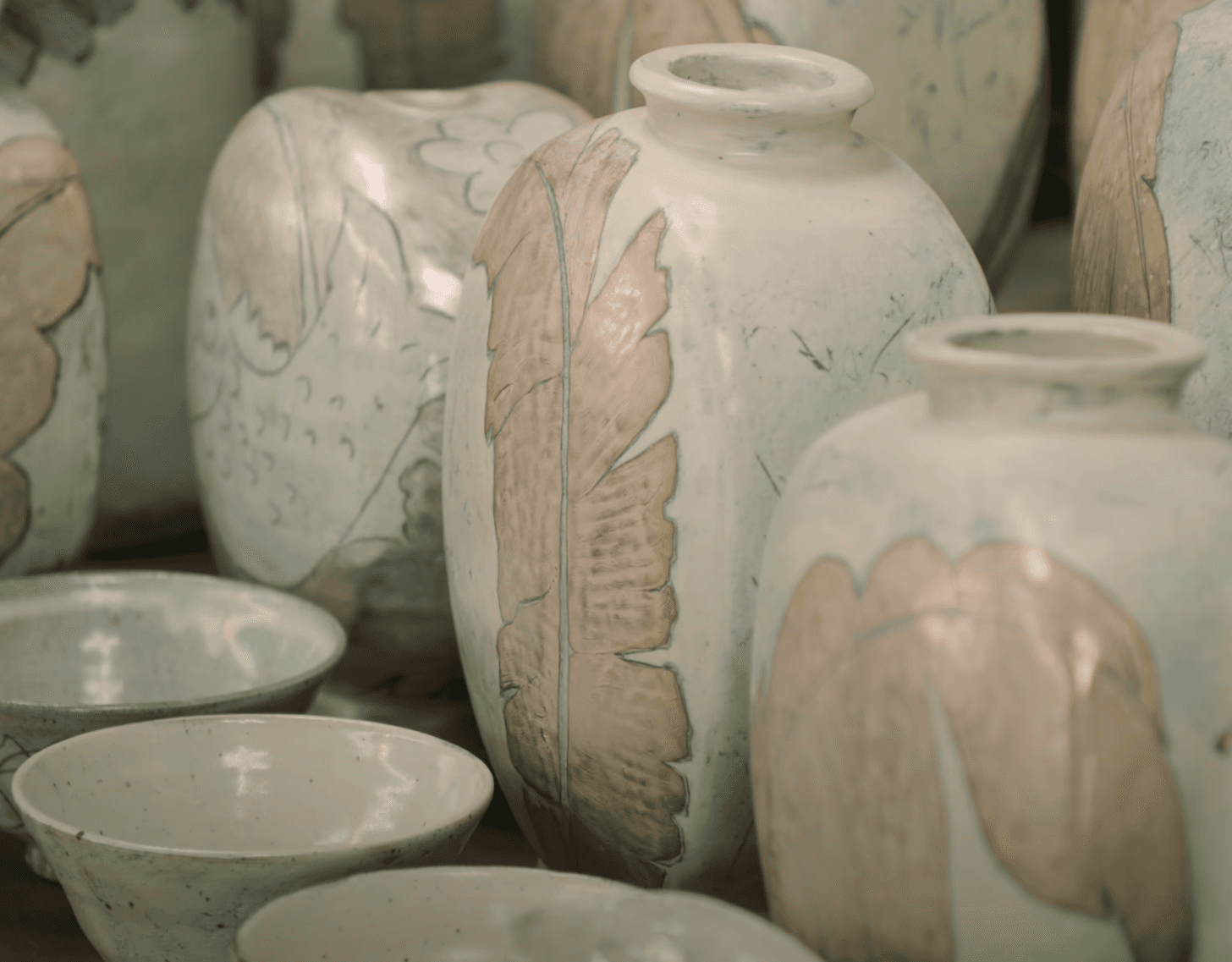
The Aesthetics and Philosophy of Harmony
At the heart of Huh Sangwook’s art lies an unending search for balance. “The beauty of Buncheong,” he says, “is the unpredictable harmony that arises when clays of different character collide.” Rather than seeking flawless symmetry, he honors the irregularities born of nature and process.
Finger marks, fissures, glazes that pool or fade — to him, these are not imperfections but time’s own language. This worldview transcends pottery. It extends to the relationship between human and nature, tradition and modernity, continuity and change. His works meditate on the quiet coexistence of opposites — a philosophy of equilibrium in flux.
Huh Sangwook’s Buncheong embodies the aesthetics of time inscribed in clay. When different substances meet and crack, when light shifts across their uneven surface, they speak of life and nature intertwined. For him, ceramics are not objects but vessels of transformation — philosophies molded by fire and patience.
Moving freely between East and West, tradition and innovation, craftsmanship and art, Huh continues to rewrite the aesthetics of harmony in the language of today. His works remind us of a simple truth: harmony is not perfection — it is beauty that grows with time.
More Article